
ROME, Italy — Prominent European human rights experts and scholars of religion have launched a coordinated international appeal urging the South Korean government to immediately release Lee Man-hee, the 95-year-old Chairman of the Shincheonji Church of Jesus, who remains in state detention.
Chairman Lee was detained by South Korean authorities on June 24, 2026, and formally indicted on June 29, 2026. The Joint Police–Prosecution Investigation Headquarters alleges that between July 2021 and January 2024, he directed the mass registration of approximately 50,000 church members into a specific political party, allegedly violating the country’s Political Parties Act.
In a sharp rebuttal, Shincheonji Church stated that individual members exercised their political freedoms independently and that both Lee and the church have fully cooperated with all state searches and seizures. The church strongly condemned the arrest, warning that detaining a 95-year-old over non-violent administrative allegations effectively amounts to physical punishment.
A Violation of International Law and the Mandela Rules
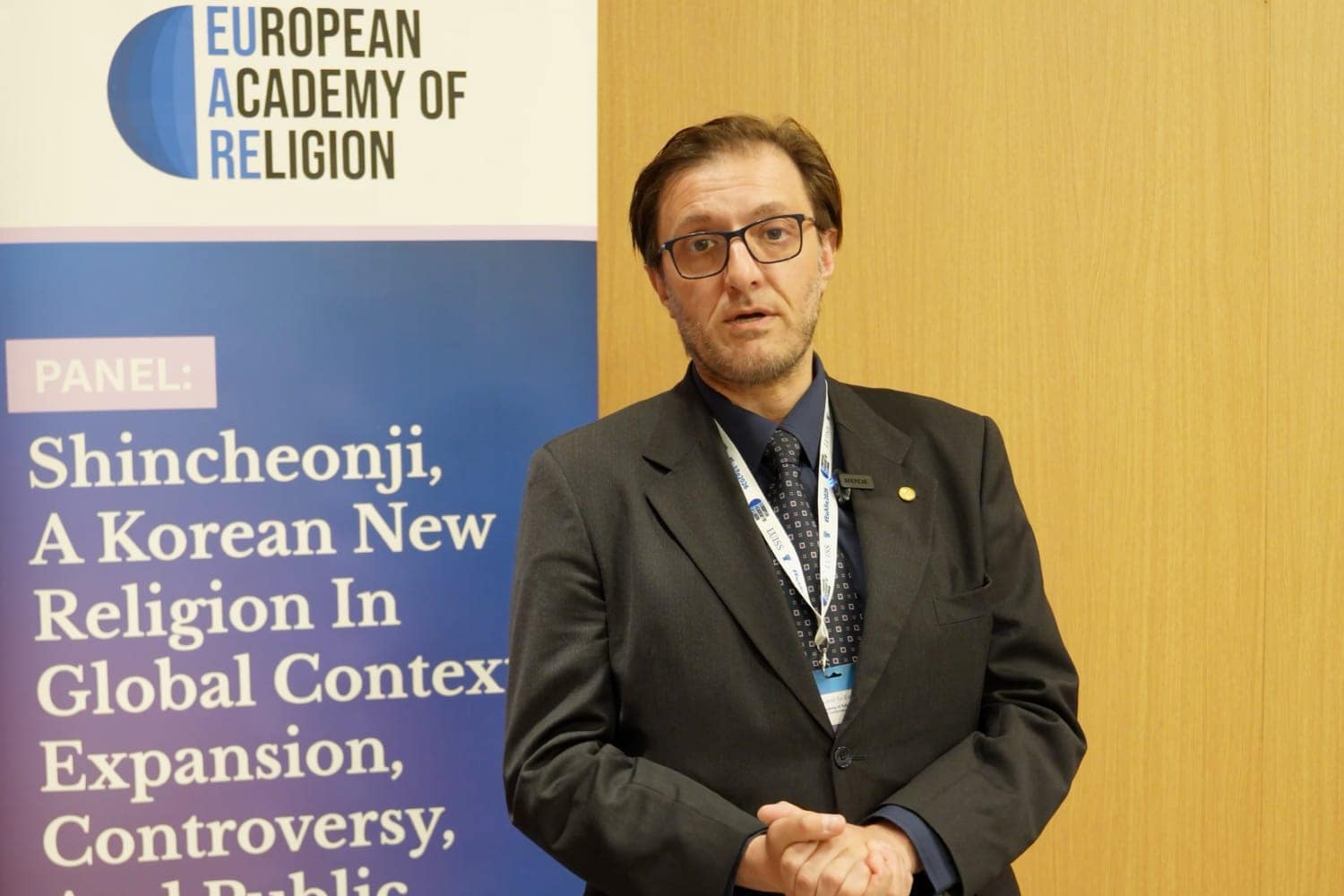
The mounting legal crisis took center stage at the European Academy of Religion’s (EuARe) Ninth Annual Conference held in Rome, Italy, on July 3, 2026. During a dedicated academic panel titled “Shincheonji, a Korean New Religion in Global Context,” prominent sociologists characterized the case as a severe breach of global human rights baselines.
“In all European Union countries, legislation mandates that those older than 80, only exceptionally, should be put in jail… and only for violent crimes,” noted Dr. Massimo Introvigne, a leading sociologist of religion and Managing Director of the Center for Studies on New Religions (CESNUR). “Here, of course, there are no blood crimes… What Korea is doing to this elderly religious leader is in violation of international law, including the United Nations’ Mandela Rules.”
Dr. Introvigne openly labeled the detention an “unmitigated scandal” masking a deep-seated political and religious vendetta.
Corroborating these concerns, Eric Roux, President of the European Interreligious Forum for Religious Freedom (EIFRF), demanded an immediate intervention to preserve South Korea’s international standing. “A man of 95 years old being put in jail is not something that you can reconcile with the objective of respecting human dignity,” Roux declared. “Get that man out of jail and do it now.”
Human Rights Experts Sound Alarm Over Democratic Backsliding
The aggressive detention has sparked deep anxieties regarding the rule of law within the East Asian democracy. High-profile human rights attorney Alessandro Amicarelli, Chairman of the European Federation for Freedom of Belief (FOB) and solicitor of the Senior Courts of England and Wales, expressed shock at the state’s tactics.
“We cannot accept that a religious leader in a democratic country, at the age of 95, has to be under this kind of pressure,” Amicarelli stated. “It looks like South Korea is departing from its own Constitution, its own human rights foundation.”
UN Human Rights Council Petitioned Over ‘State Collusion’
The controversy has officially escalated into a formal diplomatic issue. Prior to the arrest, the international human rights organizations United for Human Rights and Coordination des Associations et des Particuliers pour la Liberté de Conscience (CAP-LC) submitted a critical joint written statement to the 62nd session of the United Nations Human Rights Council (UNHRC).
The UN document (No. A/HRC/62/NGO/236, circulated on June 10, 2026) revealed that South Korea’s executive branch had ordered the creation of a specialized joint police–prosecutor task force explicitly targeting Shincheonji in December 2025.
The human rights watchdogs strongly warned that senior government officials have compromised the presumption of innocence by publicly branding the religious movement a “criminal organization.” The UN petition concluded that criminalizing a religious minority’s political participation directly violates the International Covenant on Civil and Political Rights (ICCPR), adding severe structural pressure on the South Korean judiciary to order Lee’s immediate release.