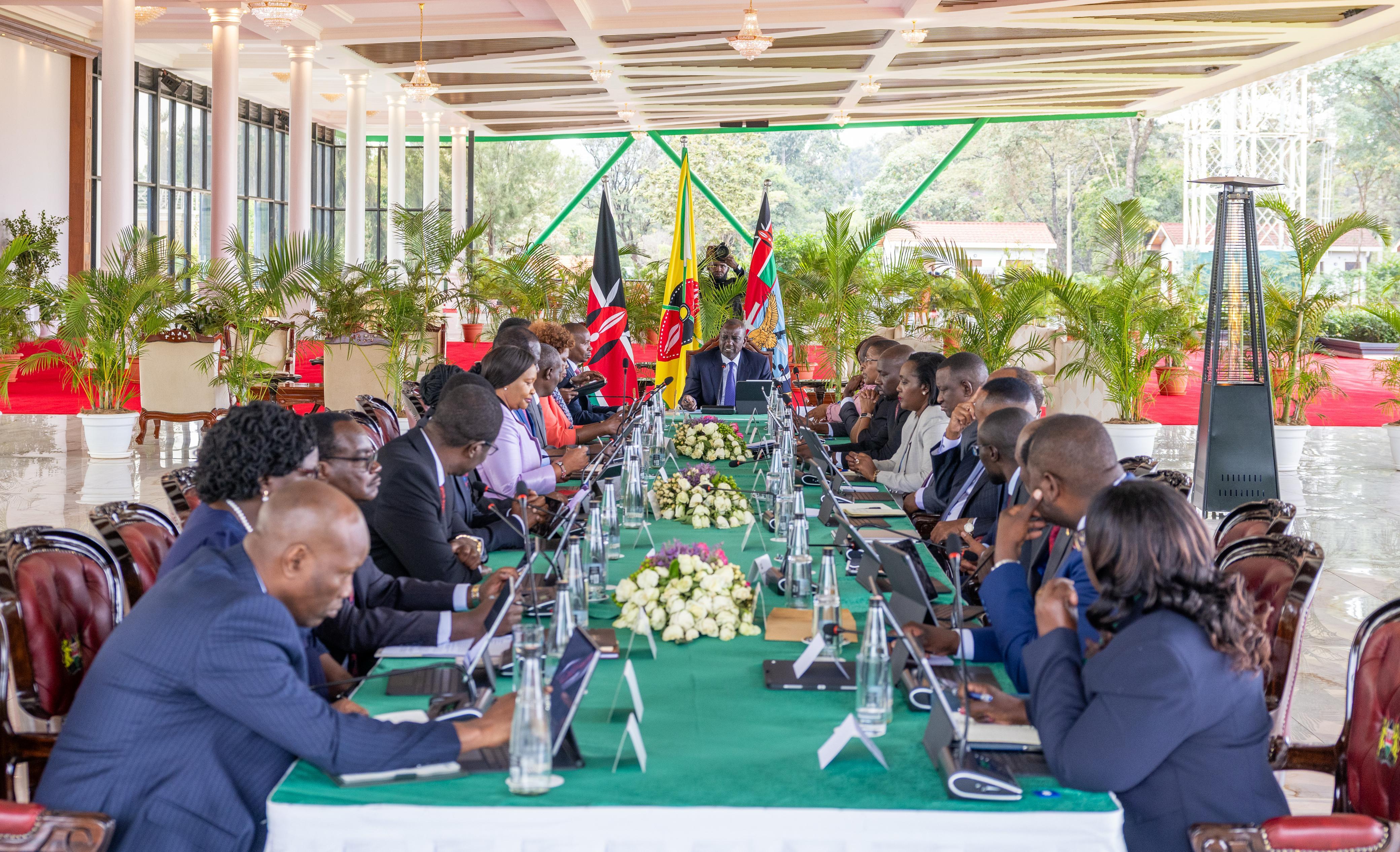
Three petitioners, including Busia Senator Okiya Omtatah, have moved to the High Court seeking orders barring President William Ruto's Cabinet Secretaries from exercising their official duties, arguing that the national executive remains unconstitutional despite an earlier court directive requiring compliance with the two-thirds gender rule.
The application, filed on November 2, 2026, by Eliud Karanja Matindi, Dr Magare Gikenyi Benjamin and Omtatah, seeks conservatory orders against 25 respondents, including Deputy President Kithure Kindiki and Cabinet Secretaries.
In a Notice of Motion filed before the High Court's Constitutional and Human Rights Division in Nairobi, the petitioners want the court to prohibit the officials from presenting themselves as members of the national executive or exercising powers and functions assigned to Cabinet members under the Constitution and other laws.
ALSO READ



They are also seeking an order suspending Executive Order No. 1 of 2025 to the extent that it assigns responsibilities for implementing and administering Acts of Parliament to the affected officials.
Additionally, the petitioners want the Controller of Budget restrained from approving withdrawals from the Consolidated Fund or any other public fund to finance the officials' salaries, remuneration and benefits.
The application is based on claims that President William Ruto failed to comply with a June 30, 2026, court judgment directing him to reconstitute the Cabinet in accordance with the constitutional two-thirds gender requirement within 120 days.
In that judgment, the court declared that the Cabinet's composition violated Article 27(8) of the Constitution because women accounted for only seven of its 25 members, compared with 18 men.
The court directed the appointing authority to make appointments that comply with the two-thirds gender principle, describing the requirement as "immediate, mandatory and fully enforceable" in appointive bodies.
However, the petitioners argue that the President failed to take corrective action within the stipulated compliance period, allowing the affected officials to continue exercising their constitutional and statutory powers.
They have cited Kenya Gazette notices published on October 30, 2026, as evidence that Cabinet Secretaries continued performing official functions after the compliance deadline.
The notices reportedly include appointments and reappointments made by Treasury Cabinet Secretary John Mbadi, Health Cabinet Secretary Aden Duale and Education Cabinet Secretary Julius Ogamba.
In his supporting affidavit, Matindi says he has attached the June judgment, Executive Order No. 1 of 2025, extracts from the October 30 Kenya Gazette and published information documenting the respondents' continued activities as members of the national executive.
"I hereby reaffirm and solemnly repeat the facts and averments stated and included in the application and petition," Matindi states in the affidavit.
Beyond seeking to bar the officials from exercising their duties, the petitioners want the court to declare that the constitutional national executive ceased to exist upon the expiry of the court-ordered compliance period.
They are also seeking to have decisions made by the affected officials after the deadline invalidated and want the Cabinet Secretaries compelled to refund public money received in salaries, remuneration and benefits since the June judgment took effect.
The Attorney-General has been named as the first respondent, while several civil society organisations, including Katiba Institute, the Kenya Human Rights Commission and the Law Society of Kenya, have been listed as interested parties.
The petitioners have asked the court to certify the application as urgent and give it priority consideration.
The application now places the composition of President Ruto's Cabinet and the enforcement of Kenya's two-thirds gender principle before the High Court for further determination.