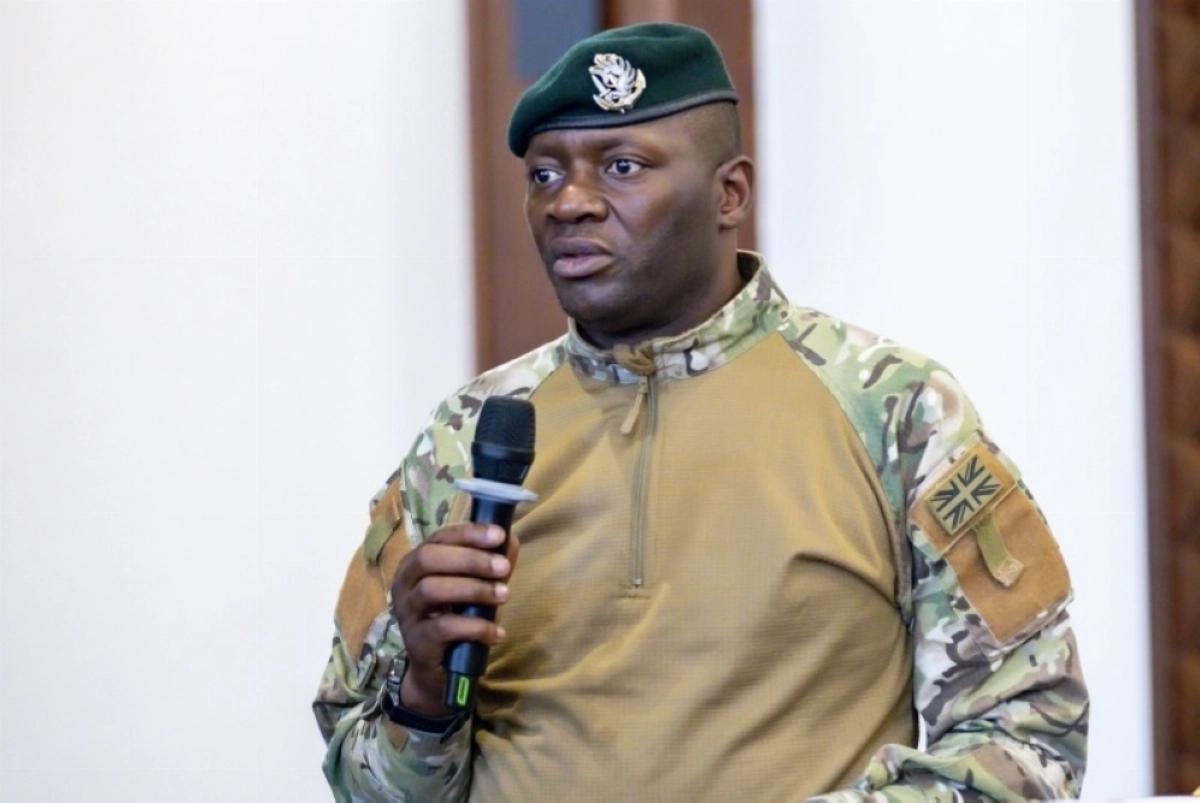
The Front for the Refoundation of the Nation (FRN), a movement led by former Democratic Republic of Congo (DR Congo) President Joseph Kabila, has denied reports that it plans to advance towards Uvira, a strategically important town in South Kivu province.
In a statement issued on Wednesday, December 4, FRN spokesperson Lawrence Kanyuka dismissed claims that the armed movement intended to recapture the town, accusing the Congolese government of spreading misinformation to divert attention from its military operations in eastern DR Congo.
“The FRN wishes to inform the Congolese people and the international community that it has neither the intention nor any interest in advancing towards Uvira,” Kanyuka said.
ALSO READ

He described the allegations as part of what he called a political strategy aimed at manipulating public opinion and shifting attention away from alleged atrocities against civilians in areas under the movement's control.
“These allegations are part of a clear strategy of political diversion and manipulation of public opinion, intended to draw attention away from the atrocities committed against civilians and to mask the regime’s continued military offensives within the liberated territories,” he added.
Uvira, a major commercial centre in South Kivu province, lies along the northern shores of Lake Tanganyika, close to Burundi's border. The town holds strategic importance because of its location and proximity to Burundi's capital, Bujumbura.
Kanyuka also accused the Congolese government coalition of intensifying military operations against FRN positions and civilian populations over the past two months.
According to the spokesperson, the offensives have involved combat drones, fighter jets, heavy artillery, long-range missiles and ground troops, with both military positions and densely populated areas reportedly targeted.
He listed several locations where he claimed government-backed forces had carried out operations, including Minembwe, Point Zéro, Mukoko, Rugezi, Kipimo, Kuwamabuye, Kuwihene, Kabanja and Minembwe-Centre along the Hauts Plateaux axis.
Other locations mentioned included Mitimbili and Munanira in Kaziba, Katogota and Lubarika in the Ruzizi Plain, and Kasika in Mwenga, alongside areas in Shabunda and Bunyakiri.
Kanyuka further cited Kalongi, Kitendebwa and Kukiduveri along the Kadasomwa axis, as well as Cyabombo, Remeka and Kasovo along the Lumbishi axis.
In Masisi and Walikale territories, he named Katoyi, Bihiri, Kazinga, Bulewusa, Lusamambo, Kateku, Kanune, Kalonge, Kinyumba, Peti and Mizenze, also known as Pinga. In Lubero, he identified Kandole, Mbyanzi, Kitchanga and Pitakongo.
The FRN spokesperson also addressed the ongoing diplomatic efforts to end the conflict, saying the movement remained committed to the Doha peace process and negotiations aimed at finding a lasting political solution.
The Qatar-mediated process brings together the Congolese government and AFC/M23 representatives in efforts to end the fighting in eastern DR Congo and address the underlying causes of the conflict. A ceasefire commitment forms part of the negotiations.
Despite accusing government forces and their allies of continuing military offensives, Kanyuka said the movement would not remain passive in the face of attacks.
“However, it will not stand idly by in the face of such barbarity; it reserves the right to take all necessary measures to defend the liberated zones and protect civilian populations against any threat, regardless of its origin,” he said.
The latest statement comes amid continued tensions in eastern DR Congo, where competing armed groups, regional forces and government-backed coalitions remain involved in a prolonged conflict that has displaced civilians and threatened regional stability.