
Turkana County Deputy Governor Dr. John Erus has urged donors funding drought response programs under the Eastern and Southern Africa Humanitarian Fund (ESAHF) to consider extending their project durations, emphasizing that the county has yet to fully recover from the devastating effects of recent prolonged droughts.
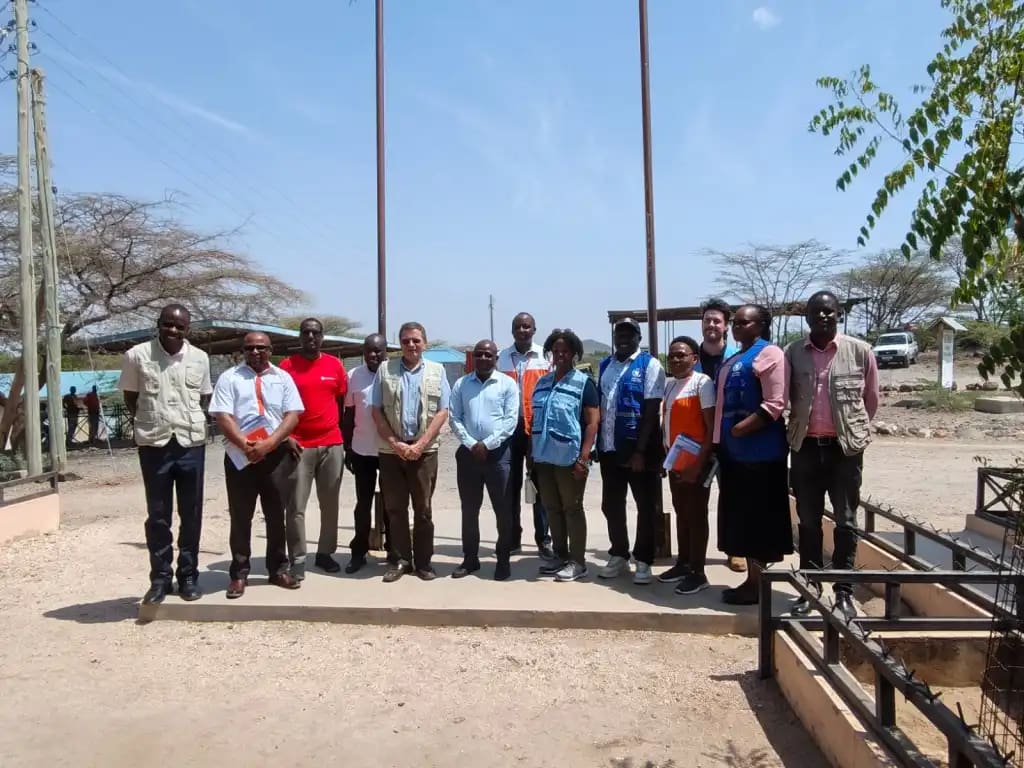
Speaking during a high-level meeting with a joint monitoring delegation from UN OCHA, UNICEF, the World Food Programme (WFP), and World Vision Kenya, Dr. Erus pointed out that the current six-month implementation window is rapidly drawing to a close despite an escalating need for sustained humanitarian interventions.
The Deputy Governor noted that continuous support remains vital to combat high malnutrition rates, secure clean water access, alleviate severe food insecurity, and manage the regional disease burden.
LEES OOK:
- County Government Delivers 10km Nawoiyaregai-Kaputir-Nakuse Road Upgrade
- Ruto Signs Historic Sovereign Wealth Fund Act to Lock Away 30% of Mineral and Oil Wealth
According to Dr. Erus, the ongoing humanitarian crisis in Turkana is severely aggravated by structurally fragile social protection systems, the destabilizing backflow of Lake Turkana that has left hundreds of coastal families homeless, and porous international borders that elevate public health risks.
Furthermore, he highlighted the urgent need for extended timelines to help the county transition and take full charge of implementing the Shirika Plan. While expressing gratitude for the collaborative, multi-agency approach used during this response phase, Dr. Erus called for the increased utilization of locally-led project implementation units to optimize ground-level results and safeguard local populations before shifting focus to long-term resilience investments.
The monitoring mission, led by Pauline Mwaniki of UN OCHA, is designed to evaluate field sites and gather structural feedback across the region.
Mwaniki confirmed that Turkana was selected alongside six other severely affected Kenyan counties following strict initial evaluations that flagged extreme vulnerability to acute malnutrition and climate shocks.
She also clarified that the current phase of the ESAHF-Kenya program is backed by a substantial 50 million dollar investment from the Government of the United States of America managed through UN OCHA.
The evaluation delegation is scheduled to conduct extensive site assessments across project installations in Turkana West, Loima, Turkana Central, and Turkana South sub-counties over the coming days.