
Approximately a year into its implementation, healthcare workers and caregivers across Turkana and Nairobi counties are successfully proving that structured play is not a luxury, but rather an essential component of healthcare.
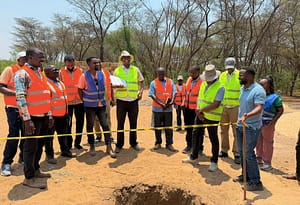
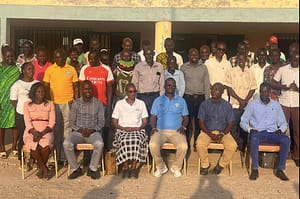
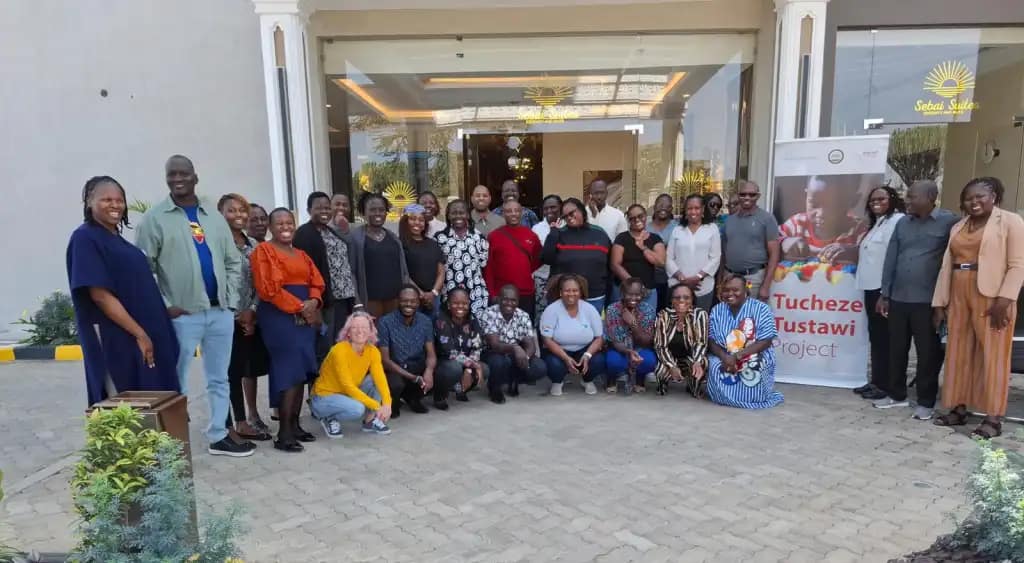
Healthcare workers, alongside sub-county and county health management teams from both regions, recently completed an intensive five-day sensitization workshop designed to systematically integrate play-based learning into everyday clinical care.
The workshop provided a vital platform for reflection and cross-learning on the ongoing implementation of Play-Based Mental Health and Psychosocial Support (MHPSS) and Social-Emotional Learning (SEL) interventions under the Tucheze Tustawi project, exactly nine months since its operational rollout.
The capacity-building workshop was made possible through a collaborative partnership between the county governments of Turkana and Nairobi, Care for Education (CFE), and Amref Health Africa, with strategic financial support from the LEGO Foundation.
LEES OOK:
- Turkana County Completes 17-Km Napetet-Nakadukui Road Project
- Turkana County Partners with GENCO Ltd for 100K Livestock Vaccination
Experts from the South Africa-based CFE led the instructional sessions, sharing evidence-based models that health teams can readily use to weave play directly into Early Childhood Development (ECD) programming.
Participants were reminded that the first three years of a child’s life are the most critical, as the developing brain forms millions of new neural connections every second during this window, building the foundational networks that shape a child’s future.
Facilitators walked through the specific structural needs of the brain at each growth stage: between 0 and 12 months, connection and sensory exploration are driven through responsive caregiving; between 12 and 24 months, movement and discovery expand rapidly through walking and physical exploration; and between 24 and 36 months, independence and imagination mature through pretend play, which teaches critical problem-solving skills and accelerates language development.
Tebbogho Makhetha, Project Manager and Master Trainer at CFE, highlighted that the core pillars of child development—social, cognitive, physical, emotional, and creative—are all strengthened exclusively by positive, nurturing, and loving early experiences.
Makhetha warned that between the ages of 4 and 18, the brain actively prunes unused connections and retains only the ones exercised most often, meaning the quality of a child’s early years structurally shapes their learning, behavior, and lifelong wellbeing.
Peer exchanges between the urban Nairobi teams and rural Turkana cohorts surfaced the reality that early childhood development challenges are widely shared across diverse settings. Teams cited a pervasive community knowledge gap regarding the developmental role of play, low involvement from fathers, limited time from over-burdened mothers, rising screen time negatively impacting language skills, and institutional constraints such as a lack of safe, dedicated play spaces.
However, field implementation over the months in Turkana has demonstrated that families do not require expensive, commercial toys to stimulate development; instead, everyday household items like stones, bottle caps, cloth, sticks, and gourds serve as powerful learning tools when paired with time, love, and cultural practices.
Turkana County Deputy Director of Family Health Services, Gabriel Lopodo, noted that open dialogue helped participants navigate real-life constraints like rigid work schedules and cultural norms to find collaborative, localized solutions.
Lopodo revealed that Turkana County will formally incorporate these strategies into the Malezi Bora initiative during Child Health Week in November, showcasing existing facility-based play activities, father-to-father support groups, and music-based care approaches. Similarly, Dr. Miriam Etole, the Kamukunji Sub-County Medical Officer of Health, emphasized that embedding play into every point of clinical service delivery simultaneously supports childhood biology, strengthens caregiver engagement, and improves overall healthcare quality.
Reflecting on the progress achieved since their initial training last year, Tucheze Tustawi Project Manager Fidelina Ndunge challenged the trained administrators to use play—especially the distributed “six blocks” toolkits—as the primary delivery channel in all future meetings and community health engagements.
Ndunge urged the managers to immediately sensitize frontline healthcare workers so that play-based approaches are uniformly delivered in every clinic engagement, while reminding the team to balance their professional output with personal self-care. Occupational Therapist and Play Specialist Abigail Friedman reinforced this message, stating that equipping adults to intentionally use play acts as a transformative tool for healing, connection, and community resilience.
Reinhard Anzeze, Technical Officer for Child Health at Amref’s Tucheze Tustawi project, noted that the data shared during the workshop justifies why play-based spaces must now occupy a line item within facility health budgets rather than being confined to educational settings.
Within clinical spaces, play heavily assists sick children in coping with illnesses, invasive medical procedures, and hospital stays, while drastically improving service quality, patient satisfaction, and recovery outcomes.
The proven return on investment ranges from shorter hospital stays and reduced pediatric anxiety to stronger family bonds. Moving forward, the workshop recommended that local facility budgets prioritize clean, child-friendly spaces, low-cost local materials, ongoing staff supervision, and the routine monitoring of MHPSS indicators.
In her closing remarks, Dr. Fatuma Rajab, the Neonatal, Child, and Adolescent Health Coordinator in Turkana, called on the participants to act as passionate advocates for “play as medicine,” noting that transferring positive energy onto young patients is essential for their growth.
The multi-sectoral path forward will focus on expanding caregiver support groups, treating caregiver mental health as a prerequisite for child health, and deepening collaboration across health, education, and social services.