Health authorities in Wajir have isolated a 20-year-old man suspected of having a viral haemorrhagic fever after he developed a severe febrile illness following travel from the Democratic Republic of Congo (DRC).
The patient, who is from Habaswein in Wajir South Sub-County, is receiving treatment in isolation as health officials investigate the cause of his illness.
Samples have been collected and are being prepared for specialised laboratory testing.
Patient Developed Illness While in DRC
The man reportedly developed fever and headache on September 2, 2026, while in the DRC, where he was working as a “turnboy” on a cargo truck.
He later travelled by road through Uganda before entering Kenya through Malaba.
He then proceeded to Nairobi and Isiolo before eventually arriving in Habaswein around September 20.
After arriving in Habaswein, the patient sought treatment at Hilac Medical Clinic, where he was reportedly treated for pneumonia and septicaemia for about three days.
His condition did not improve, leading to his transfer to Albadar Nursing Home.
At the facility, he was found to have severe anaemia, with a haemoglobin level of 4 g/dL.
He has since received two units of whole blood, as well as intravenous Augmentin and paracetamol, but remains clinically unwell.
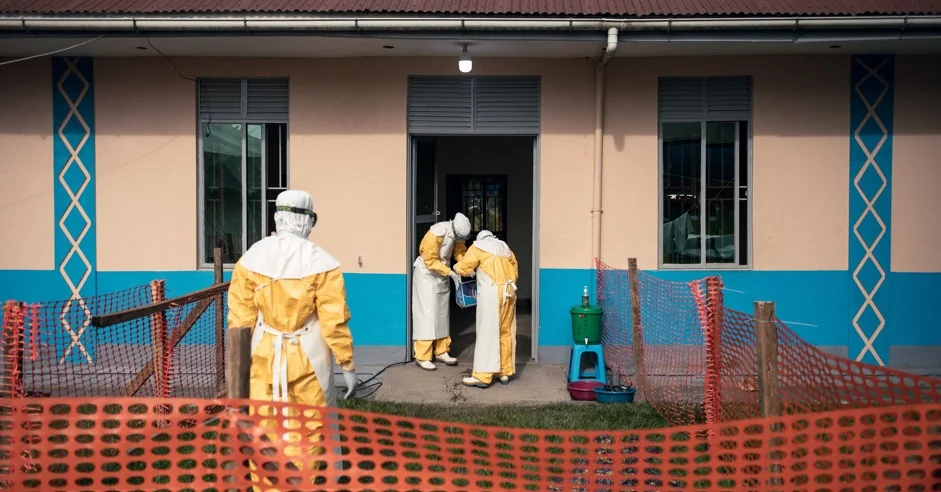
Health officials have isolated the patient and collected blood samples for laboratory investigations.
The samples are expected to be sent to the Kenya Medical Research Institute (KEMRI) for specialised testing after local health facilities indicated that they do not have the equipment required for the investigations.
The suspected viral haemorrhagic fever has not been confirmed.
Laboratory testing will determine the cause of the patient's illness.
Meanwhile, health authorities have started identifying and listing people who may have come into contact with the patient during his journey from the DRC through Uganda and Kenya, as well as after his arrival in Habaswein.
The contact-tracing exercise is intended to identify anyone who may have been exposed and ensure they are monitored for possible symptoms.
Health officials are also strengthening disease surveillance and other public-health measures in the area as investigations continue.
The patient remains in isolation under medical care and close monitoring as authorities await laboratory results.
The developments come against the backdrop of Kenya's reported first imported Ebola case and first death linked to an imported case.
According to the information provided, a Kenyan man who had travelled from the Democratic Republic of Congo tested positive for Bundibugyo Ebola virus disease.
He reportedly arrived in Nairobi through Uganda on October 3, was isolated and treated at Nairobi Hospital, but died on October 6.
The suspected illness in the Wajir patient has not been confirmed as Ebola, and laboratory investigations are required to establish the cause of his condition.