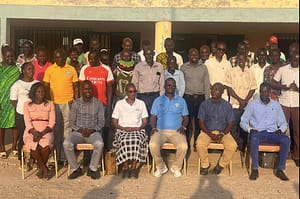


A multi-sectoral team drawn from government agencies and development partners in Turkana County is undergoing a two-day training on a new data management system aimed at unlocking economic opportunities for refugees and host communities.
The KISEDP Integrated Management Information System (KIMIS) is designed to provide reliable data to guide investment decisions and development interventions across the county.
Speaking during the opening of the training, Turkana County Deputy Governor Dr. John Erus said the system would help address the longstanding challenge of fragmented and inadequate information used in development planning.
“I am aware that the proposed KIMIS system, promises to avail all the relevant information required for making decisions at a glance. In this case, the possibility of duplication and wastage of resources will be greatly minimized,” Dr Erus said.
Dr Erus said KIMIS had been designed to align with the County Integrated Development Plan (CIDP) and the Shirika Plan, with a specific focus on facilitating wealth creation by unlocking opportunities in agriculture, livestock, trade, transport, regional commerce, the circular economy and emerging value chains.
ALSO READ:
- Turkana County, IRC Sign New Deal to Expand Health and Development Services
- Turkana Stakeholders Form Fisheries Coordination Forum to Boost Blue Economy
- Turkana Residents Demand Compensation Before Oil Exploration Resumes
“This is a tool that firmly places Turkana in the ongoing national discussion of the Kenya we want to see beyond the next decade. As a county, we commit to work closely with other government agencies and development partners to ensure that host communities and refugees benefit from sustainable economic opportunities and become part of the desired change,” he said.
Oil, Gas and Gold Mining Boost Turkana Economy
Turkana County Commissioner Julius Kavita said the recent resumption of oil and gas drilling, together with emerging gold mining activities, presented a major opportunities for the country’s economy.
Kavita praised residents and security agencies for helping maintain a peaceful environment that can support investment and exploitation of Turkana’s natural resources.
He said stability would be critical in enabling communities to benefit from the economic opportunities emerging from the county’s resource potential.
KIMIS Data to Support Investment Opportunities
While explaining how the system works, UNHCR Kakuma Sub-Office Head Sateesh Nanduri said the primary data collected for KIMIS had already identified and organized information on available skills, the nature and size of the workforce, talents in games and sports, registered and compliant businesses and the amount of plastic waste generated daily.
The information is expected to support investment opportunities, including initiatives within the circular economy.
Nanduri said the available data suggested that Kakuma could transition from predominantly humanitarian towards more sustainable models that promote self-reliance among both refugees and host communities.
500,000 More People
Kakuma Camp manager and Head of the Department of Refugee Services (DRS) Thomas Siele said the host-refugee development agenda could benefit from the large population in the area, which provides a ready market for goods and service.
“Going by the current count, the estimated population of refugees exceeds 300,000. The host community’s population also stands at slightly above 200,000. This, therefore, is the largest market in the county and the region,” he said.
The combined population, according to Siele, creates significant opportunities for businesses and investors across different sectors.
Deputy Director of Partnerships Michael Aupe said all partners implementing programmes within the refugee setting would be required to provide additional information to be uploaded as baseline data before KIMIS is made available to the public.
Participants in the two-day training are also expected to develop a document identifying key market constraints, partnership opportunities, medium and long-term development plans and priority value chains with the highest potential returns on investment.
The KIMIS initiative is expected to provide a stronger evidence base for development planning while helping Turkana attract investment and create sustainable economic opportunities for both refugees and host communities.