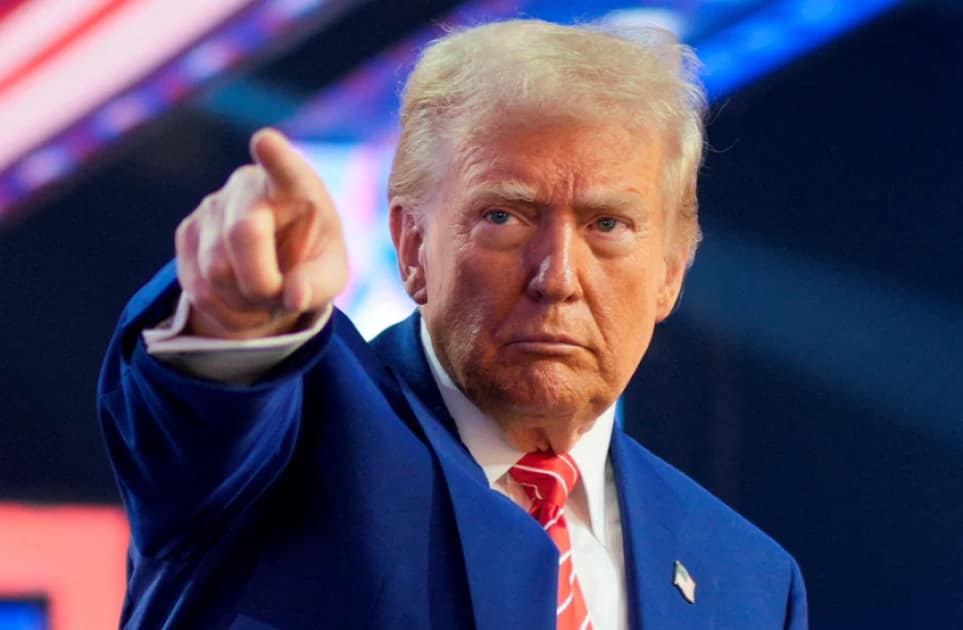

US President Donald Trump has warned that US military operations against Iran could extend beyond a month, as Tehran stepped up retaliatory attacks targeting American allies in the Gulf.
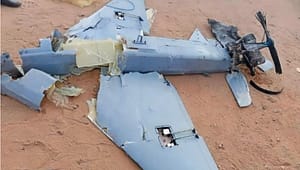
The escalation came after two drones struck the US embassy in Riyadh on Tuesday, shortly after Washington urged Americans to leave Middle Eastern countries from Egypt eastward. Trump quickly vowed to respond “soon” to the embassy attack but did not provide further details.
Meanwhile, powerful explosions shook buildings across Tehran overnight as fighter jets flew over the city, according to journalists from Agence France-Presse. The The Pentagon said it had achieved air superiority over Iran, which has been governed by Islamic clerics since 1979 and has long maintained a hostile stance toward the United States.
Beyond launching missile and drone attacks that forced QatarEnergy to halt liquefied natural gas (LNG) production at key facilities in Ras Laffan and Mesaieed in Qatar — a country that accounts for a significant share of global LNG exports — Tehran also threatened to choke one of the world’s most vital shipping lanes, the Strait of Hormuz.
Iran’s Revolutionary Guard has issued warnings that vessels attempting to transit the strait — through which about one-fifth of global crude oil and large volumes of LNG normally pass — could be attacked, effectively disrupting maritime traffic and escalating the regional crisis.
These developments compound a broader energy and security shock sparked by the ongoing conflict, which has seen global LNG supplies tighten sharply and international shipping routes rendered increasingly hazardous.
“We will burn any ship that tries to pass through the Strait of Hormuz,” Revolutionary Guards General Sardar Jabbari said of the strategic waterway to the Gulf through which about 20 percent of global seaborne oil travels.
President Donald Trump said the war — which began on Saturday with US and Israeli strikes that killed Ayatollah Ali Khamenei, Iran’s supreme leader — was progressing “ahead of schedule,” but stressed that the United States was prepared for a sustained conflict if necessary.
“From the beginning we projected four to five weeks, but we have capability to go far longer than that,” Trump said at the White House.
President Donald Trump for the first time publicly outlined the objectives of the military operation against Iran, saying the campaign aims to destroy Tehran’s missile capabilities, naval forces and nuclear programme, as well as halt its support for armed groups across the region.
Notably, the goals did not include toppling the Islamic Republic, despite Trump having urged Iranians over the weekend to rise up and overthrow their government.
As Iran intensified its retaliation, Saudi Arabia — home to one of the region’s largest oil refineries, already shut down following an earlier attack — said it intercepted eight additional drones over two cities, including the capital, Riyadh, on Tuesday.
The Saudi defence ministry confirmed that two drones struck the US embassy in Riyadh, with embassy officials reporting “a limited fire and minor material damage.”
Speaking to the NewsNation network, President Donald Trump said “you’ll find out soon” when asked how the United States would respond to the latest attacks, declining to provide further details.
The US mission in Riyadh urged American citizens in the capital, as well as in Jeddah and Dhahran, to shelter in place. Meanwhile, the United States Department of State ordered the departure of non-emergency personnel and their families from Bahrain, Jordan and Iraq.
Qatar, which had maintained relatively cordial ties with Iran before the outbreak of war, said it shot down two Iranian bombers — marking the first time a Gulf Arab state has downed aircraft from its larger neighbour.
For a second consecutive day, the Israeli military carried out strikes in Lebanon, saying it was targeting the Iran-backed group Hezbollah after the group claimed responsibility for rocket and drone attacks on Israel.
As the conflict widened, Israel’s Prime Minister Benjamin Netanyahu said joint strikes with the United States on Iran would continue but insisted they would not become “an endless war.” He told Fox News the campaign “may take some time, but it’s not going to take years,” framing the effort as focused and finite despite deepening regional hostilities.
US Secretary of State Marco Rubio offered a new account of how the conflict with Iran began, saying on Monday that the United States — which had built up its military to levels not seen since the 2003 Iraq invasion — acted only after learning that ally Israel was planning strikes on Iran.
Rubio said Tehran had been preparing to target US forces in the region in response to Israel’s anticipated attack, prompting President Donald Trump to intervene “pre-emptively” alongside Israel. “The imminent threat was that we knew that if Iran was attacked — and we believed they would be attacked — that they would immediately come after us,” Rubio told reporters before briefing Congress.
The account drew skepticism from rival Democrats. Senator Mark Warner described it as “uncharted territory” for the United States to be drawn into military action based on Israel’s perception of a threat.
Iran’s Foreign Minister Seyed Abbas Araghchi countered Rubio’s claims, asserting that “there was never any so-called Iranian ‘threat.’”
“Mr. Rubio admitted what we all knew: U.S. has entered a war of choice on behalf of Israel’,” he posted on X.
Israel’s Prime Minister Benjamin Netanyahu told Fox News that Iran had been developing new weapons sites since a 12‑day conflict in June, when Israel and the United States conducted coordinated strikes on the Islamic Republic.
In an earlier interview with the New York Post, President Donald Trump — who campaigned on ending US involvement in foreign wars — did not rule out sending US ground troops to Iran “if they were necessary.”
Rising Death Toll
Israel’s military issued new evacuation orders on Tuesday for dozens of areas in Lebanon, following explosions that shook the capital a day earlier as Israeli warplanes targeted Beirut’s southern suburbs and the country’s south.
The Lebanese government reported at least 52 fatalities in the strikes, which came after Hezbollah toward Israel in retaliation for the death of Supreme Leader Ayatollah Ali Khamenei.
In an unprecedented move, Lebanese Prime Minister Nawaf Salam ordered an immediate prohibition of Hezbollah’s military activities and called on the group to surrender its weapons.
Across the region, the death toll has continued to rise. According to US Central Command, six US military personnel have been killed so far. Iranian media report hundreds of casualties, including at a girls’ school, though Agence France-Presse journalists have not independently verified these figures.
The US-based Human Rights Activists News Agency (HRANA) reported 101 casualties in Iran on the third day of the conflict, including 85 civilians and 11 military personnel.
Residents of Tehran have been caught between fear and grim anticipation. AFP reporters observed some leaving the unusually quiet capital with suitcases in hand. A 45-year-old lawyer described the mix of terror and hope in a voice message: “Every time we hear the noises, we get scared for just a second, but we experience some joy and excitement every time we hear a hit.”