LODWAR, October 9, 2026 — Turkana County health officials and development partners have identified stronger community health services and the use of Social Health Authority (SHA) funding as key priorities for sustaining emergency health and nutrition services across the county.
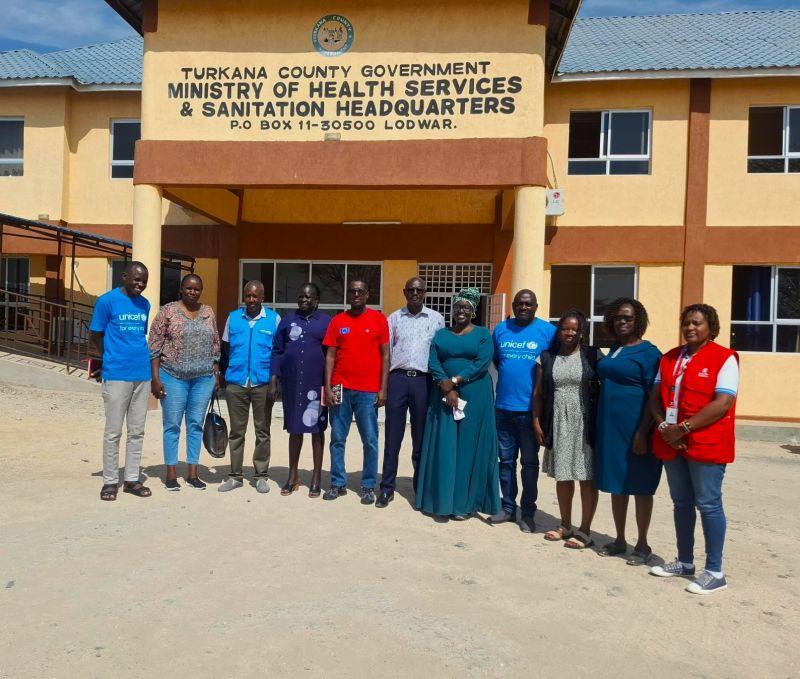
The priorities emerged during the close-out meeting for Phase I of the six-month Emergency Integrated Nutrition and WASH Response Project, implemented by the County Government of Turkana in partnership with Save the Children Kenya (SCI).
Funded through the Eastern and Southern Africa Humanitarian Fund (ESAHF), the project aimed to reduce acute malnutrition by providing integrated lifesaving health, nutrition and water, sanitation and hygiene (WASH) services, particularly to hard-to-reach and mobile populations.
Turkana Seeks to Strengthen Community Health Services
Chief Officer for Preventive and Promotive Health Services Agnes Mana said the project had complemented government efforts to improve health and nutrition outcomes, adding that lessons from the intervention would guide future programmes.
“Taking services to our people through integrated outreaches is key, especially for mobile populations along the migratory routes. The lessons and reflections from this project are important for our future programming,” Mana said.
She called for stronger household visits, follow-up of patients who miss scheduled services and targeted interventions through school health programmes and the One Health “kimormor” approach.
Mana also highlighted the county’s reported immunization coverage of 66 per cent, saying more work was needed to improve access to essential child health services.
UNICEF Calls for Sustainable Outreach Services
UNICEF Kenya Health and Nutrition Coordinator Francis Kidake called for cost-effective, government-led service delivery as humanitarian funding comes under pressure.
He emphasized the need to put communities at the centre of planning and implementation to ensure essential services continue reaching vulnerable populations.
“We are not going to run away from outreaches. Turkana is not yet at the WHO threshold, so we must find the best ways to sustain them even with shifts in donor funding,” Kidake said.
He urged health teams to use documented evidence, including findings from the R-SWITCH study and experience gained through Integrated Community Case Management (iCCM), to guide future interventions and strengthen community engagement.
SHA Funding Identified as a Potential Support Mechanism
The meeting identified Social Health Authority funds as a potential source of support for facility-led outreach services.
Kakelae and Kaaleng health facilities were cited as examples of facilities already using this approach.
The discussions focused on sustaining community services while improving the efficiency of available resources and reducing dependence on external humanitarian funding.
Project Reached Communities Through 184 Outreach Sites
The six-month intervention expanded access to essential health and nutrition services through 184 outreach sites across Turkana County.
The services included nutrition screening, immunization, antenatal and postnatal care, child welfare services and WASH interventions for remote communities.
The response also received support through several complementary interventions. The county government provided 10,133 bags of Corn Soya Blend (CSB++), while partners supported 33 additional outreach sessions.
UNICEF supported WASH services, while World Vision provided unconditional cash transfers that reached 8,950 households.
Save the Children Reaffirms Partnership
Save the Children International Programme Manager for Turkana, Shariff Abdalla, reaffirmed the organisation’s commitment to continued collaboration with the county government and health partners.
He credited the project’s achievements to partnerships built over the years.
The close-out meeting brought together county health officials and development partners to review the project’s achievements, document lessons and identify priorities for the next phase of emergency health and nutrition programming.
The discussions highlighted the importance of maintaining outreach services, strengthening community participation and exploring sustainable funding mechanisms to ensure vulnerable households continue accessing essential care.