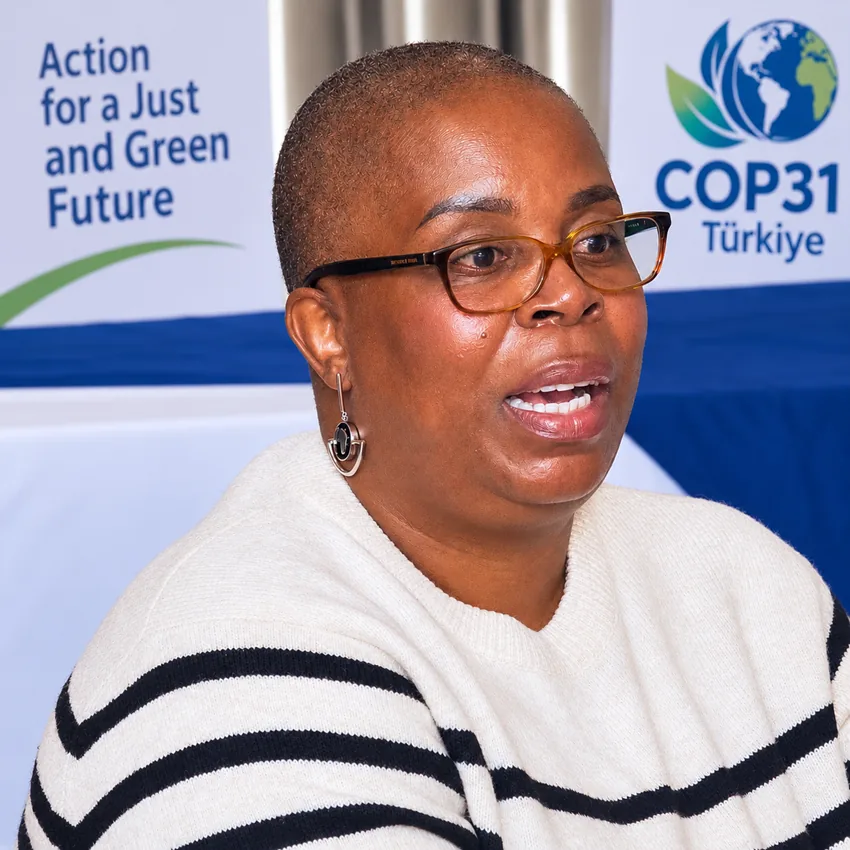
Climate advocacy organisation Shine Collab has condemned the outcomes of COP31, accusing governments of failing to deliver meaningful progress on commitments critical to Africa, women and other communities disproportionately affected by climate change.
In a statement following the conference in Antalya, Türkiye, the organisation said a summit presented as the “Implementation COP” had fallen short of expectations on climate justice, fossil fuel phase-out, Just Transition and adaptation financing.
COP31 opened with expectations that countries would move beyond promises and agree on practical measures to address the climate crisis. Among the key priorities were the establishment of a dedicated institutional body on Just Transition, a credible roadmap for phasing out fossil fuels and a commitment to triple adaptation finance.
ALSO READ


However, Shine Collab said the negotiations were characterised by political disagreements, inconsistent commitments and a lack of progress on issues it considers essential to climate justice.
Dr Melania Chiponda, a climate activist and Executive Director of Shine Collab, said the organisation had expected concrete decisions but was disappointed by the direction of the negotiations.
“We came to COP31 with the expectation that this would be the COP of implementation. We expected a constituted body on Just Transition, a credible roadmap for phasing out fossil fuels and a clear commitment to tripling adaptation finance,” she said.
Chiponda accused the negotiations of diverting valuable time into discussions that did not adequately address structural inequalities in energy access and climate financing.
The organisation expressed concern that discussions around electrification had taken attention away from what it described as deeper challenges, including energy poverty, fossil fuel dependency and unequal access to climate finance.
While recognising the importance of electrification, Shine Collab argued that it should form part of a broader, adequately financed and community-centred energy transition.
The organisation warned that the conference risked ending without a credible pathway for phasing out fossil fuels, a sufficiently empowered Just Transition mechanism or adequate commitments to increase adaptation financing.
It said the absence of progress on these issues would have serious implications for African countries, women, Indigenous Peoples and climate-vulnerable communities.
Chiponda also criticised the negotiating positions of the European Union and fossil fuel-producing countries, arguing that their approaches had contributed to weakening ambition and limiting progress on climate commitments.
She warned that continued resistance to transformative climate action could deny vulnerable communities the resources and recognition needed to respond to climate change.
Shine Collab said the perceived gap between previous climate commitments and their implementation was undermining confidence in the United Nations Framework Convention on Climate Change (UNFCCC) process.
The organisation argued that repeated political disagreements and delays in addressing substantive climate justice concerns were raising questions about the effectiveness of international climate negotiations.
It also linked the lack of progress to concerns about delivering on the Paris Agreement's goal of limiting global temperature rise to 1.5°C.
Despite its criticism, the organisation maintained that the outcome would not weaken its commitment to climate advocacy.
“Our hope is not lost. Despite the betrayal of expectations at COP31, we remain committed to challenging these outcomes, holding governments accountable and advancing a feminist, decolonial and community-centred vision of climate justice,” Chiponda said.
She added that the organisation would continue engaging with climate activists, feminist movements and civil society groups in the months ahead.
As attention shifts towards COP32 in Ethiopia, Shine Collab has called on governments to rebuild confidence in international climate negotiations by honouring existing commitments and ensuring that future decisions produce tangible benefits for vulnerable communities.
The organisation said Ethiopia would have an opportunity to demonstrate leadership in restoring confidence in global climate negotiations.
It wants COP32 to deliver a meaningful Just Transition framework, an equitable pathway away from fossil fuels, predictable and accessible grant-based adaptation financing, and stronger commitments to include women, Indigenous Peoples, energy-poor households and frontline communities in climate decision-making.
Shine Collab maintained that climate action must be supported by adequate financing, accountability and meaningful participation by communities in the Global South.
“Climate implementation without justice is not implementation. A Just Transition without resources is an empty promise. And climate commitments without accountability are simply political rhetoric,” the organisation said.
The statement concluded with a call for climate action that is feminist, decolonial, adequately financed and rooted in the needs and aspirations of communities most affected by the climate crisis.