
Before becoming Nairobi Governor in 2022, Johnson Sakaja served as Nairobi Senator from 2017 to 2022, a period during which he sponsored and co-sponsored legislative proposals addressing some of Kenya’s governance, social and economic challenges.
His legislative interests covered retirement benefits for county employees, disaster risk management, the constitutional relationship between the national and county governments, entrepreneurship and timely payment of suppliers.
Among the notable proposals associated with his Senate tenure were the County Governments Retirement Scheme Bill, 2018; the Disaster Risk Management Bill, 2021; the Determination of the Nature of Bills (Procedure) Bill, 2018; the Startup Bill, 2021; and the Prompt Payment Bill, 2021.
ALSO READ


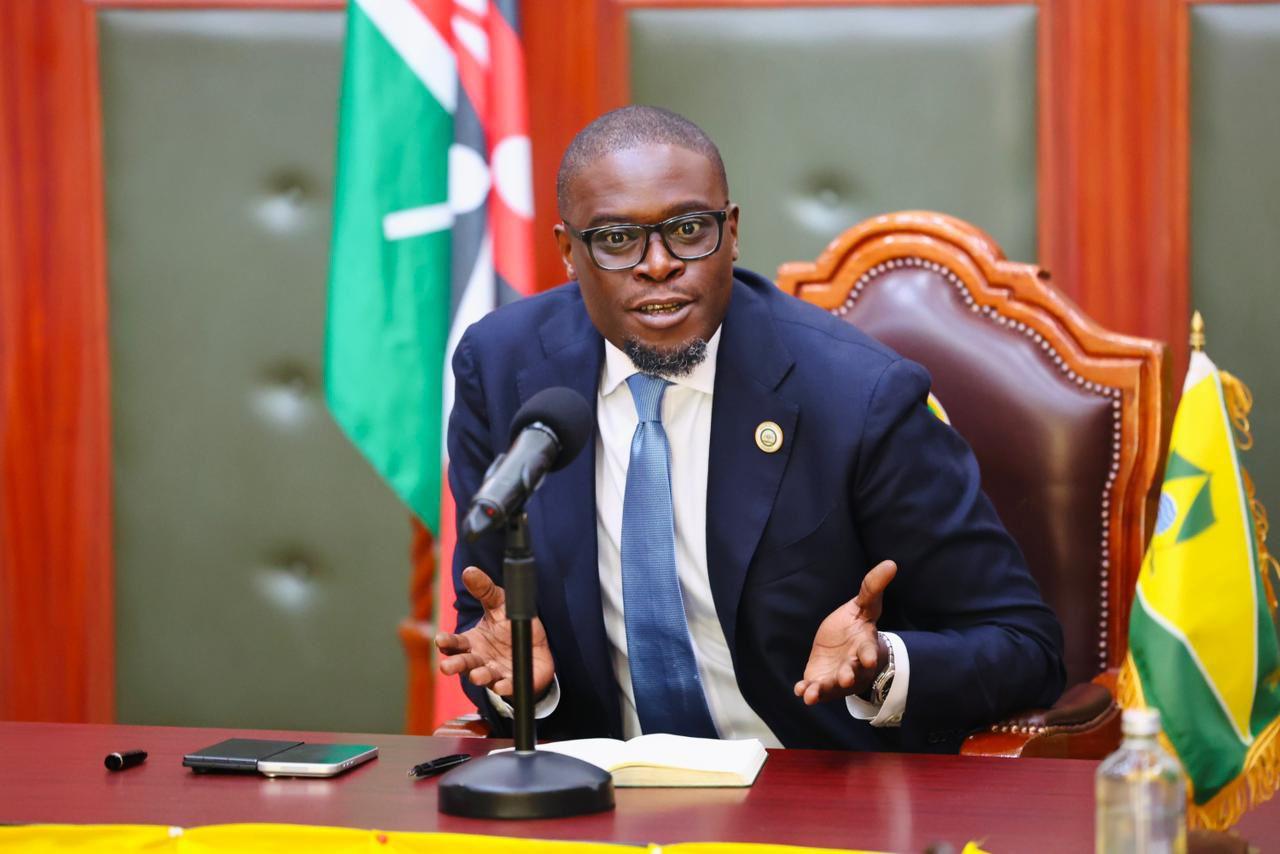
He also supported initiatives addressing access to government procurement opportunities for youth, women and persons with disabilities.
County workers’ retirement benefits
One of Sakaja’s key legislative initiatives was the County Governments Retirement Scheme Bill, 2018, which he sponsored while serving as Chairperson of the Senate Committee on Labour and Social Welfare.
The Bill sought to establish a mandatory retirement benefits scheme for county government employees across all 47 counties.
It proposed a structured pension arrangement, including the establishment of a Board of Trustees to oversee the scheme and safeguard members’ retirement savings.
The proposal addressed concerns surrounding pension contributions, delayed remittances and the security of retirement benefits for county employees.
Its broader objective was to strengthen retirement protection for public servants working under Kenya’s devolved system of government.
Disaster risk management
Sakaja also worked with Senator Mutula Kilonzo Jr. on disaster risk management legislation.
The two legislators co-sponsored the Disaster Risk Management Bill, 2021, which sought to establish a coordinated national framework for preventing, preparing for and responding to disasters.
The proposed framework was intended to move the country beyond a largely reactive approach by strengthening disaster prevention, preparedness, response and recovery.
The legislation was particularly relevant to Kenya's recurring emergencies, including floods, droughts, landslides and fires.
The Senate passed the 2021 Bill and referred it to the National Assembly for consideration.
Kenya subsequently enacted the National Disaster Risk Management Act, 2026, which was assented to on May 29, 2026, and commenced on June 16, 2026. The law establishes the National Disaster Risk Management Authority and County Disaster Risk Management Committees to strengthen coordination between the two levels of government.
Defining the nature of parliamentary Bills
In 2018, Sakaja and Mutula Kilonzo Jr. co-sponsored the Determination of the Nature of Bills (Procedure) Bill, 2018.
The proposal sought to establish a clear process for determining whether legislation introduced in Parliament concerned county governments.
This question is important under Kenya’s constitutional framework, which assigns distinct responsibilities to the national and county governments while providing for the Senate to represent and protect county interests.
The proposed procedure was intended to reduce disputes over the classification of Bills and clarify when the Senate should participate in the legislative process.
Supporting startups and entrepreneurship
In 2021, Sakaja sponsored the Startup Bill, 2021, an initiative aimed at strengthening Kenya’s innovation and entrepreneurship ecosystem.
The proposal sought to create a supportive environment for startups through registration frameworks, incubation programmes, access to investment and financial and non-financial incentives.
It also sought to strengthen connections between entrepreneurs, universities, research institutions and investors.
The initiative addressed challenges facing emerging businesses, particularly access to capital, mentorship, markets and supportive regulation.
The Startup Bill subsequently went through parliamentary processes, including consideration by the National Assembly.
Addressing delayed payments to suppliers
Sakaja also co-sponsored the Prompt Payment Bill, 2021, alongside nominated Senator Farhiya Haji.
The proposal sought to establish a legal framework for timely payment of suppliers providing goods, works and services to government entities at both national and county levels.
Delayed government payments have been a longstanding challenge for businesses, particularly small and medium-sized enterprises that rely on public contracts.
Such delays can disrupt cash flow, increase borrowing costs and leave suppliers struggling to meet their financial obligations despite having delivered contracted services.
The Bill sought to introduce mechanisms to improve payment discipline, accountability and the protection of businesses supplying government institutions.
The proposal was debated and passed by the Senate before being referred to the National Assembly.
Expanding procurement opportunities
Another area of policy interest associated with Sakaja's legislative work was the participation of youth, women and persons with disabilities in government procurement.
Kenya's public procurement framework provides for at least 30 per cent of procurement opportunities to be allocated to enterprises owned by these groups through the affirmative-action framework commonly known as Access to Government Procurement Opportunities (AGPO).
The policy recognises public procurement as an important instrument for economic empowerment, enterprise development and job creation.
It seeks to enable businesses owned by traditionally disadvantaged groups to benefit from public expenditure and compete for government contracts.
The 30 per cent allocation, however, is an existing statutory and policy requirement and should not be attributed to Sakaja as an individual legislative achievement.
His earlier role in employment legislation
Before his Senate tenure, Sakaja was also associated with the National Employment Authority Bill, which sought to establish an institution to coordinate employment services and strengthen access to job opportunities.
The proposal provided a framework for employment promotion, labour-market coordination and support for jobseekers, particularly young people and marginalised groups.
The National Employment Authority Act was assented to on April 1, 2016, and commenced on April 21, 2016, before Sakaja began his Senate term in 2017.
The legislation therefore forms part of his earlier parliamentary record rather than the Bills he sponsored as Nairobi Senator.
A legislative agenda beyond Nairobi
Taken together, Sakaja’s legislative record reflects an interest in issues extending beyond Nairobi’s immediate concerns.
His work touched on devolution, public-service welfare, disaster preparedness, entrepreneurship, employment creation, supplier protection and economic empowerment.
Although the proposals followed different legislative paths and did not all become law during his Senate tenure, they brought important policy questions before Parliament and contributed to discussions on Kenya’s governance and development priorities.
His transition from the Senate to City Hall in 2022 marked a shift from legislative work to executive leadership. However, many of the issues addressed in his parliamentary record remain relevant to the administration of Nairobi and the country’s wider development agenda.