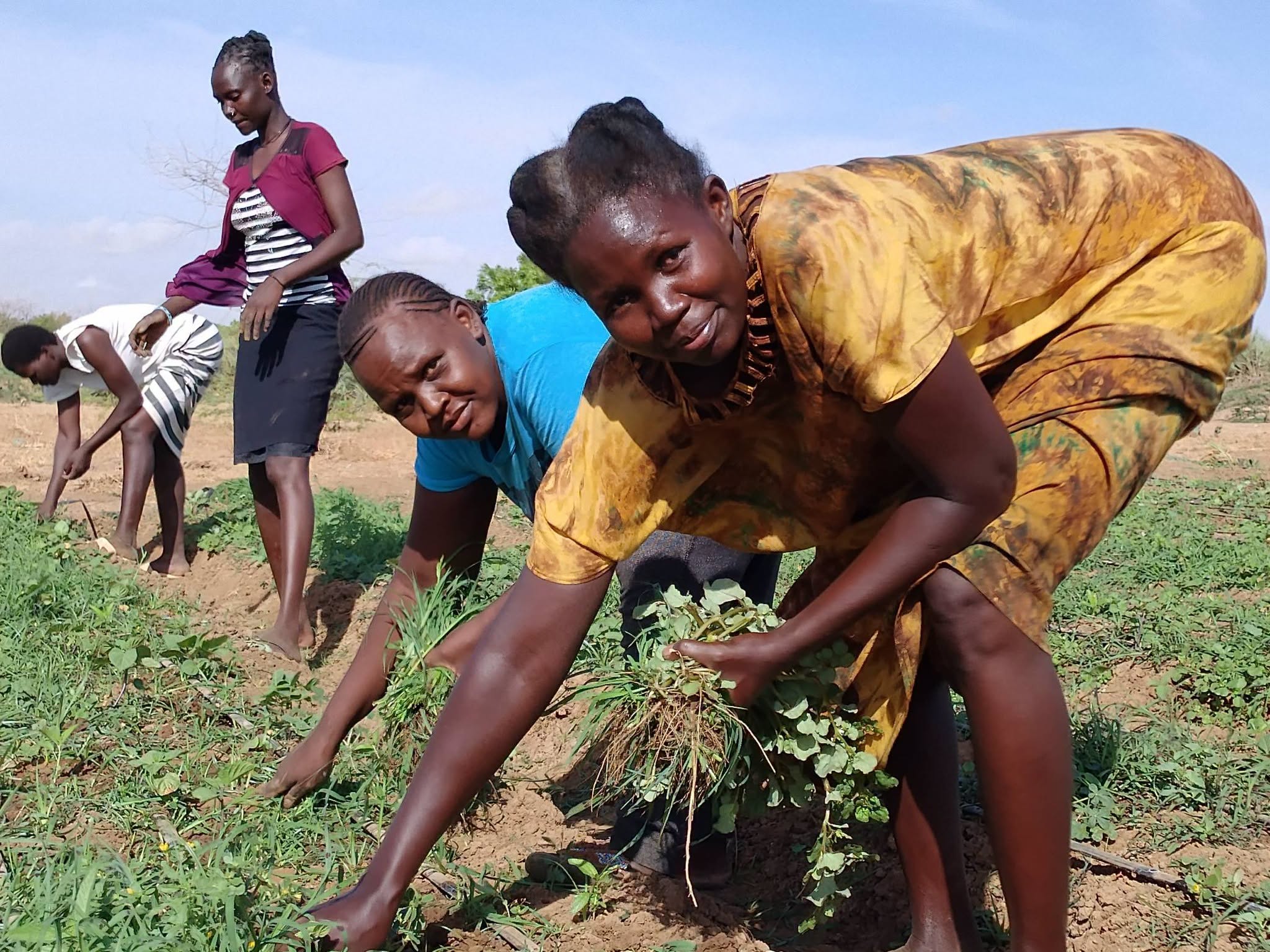
Thirty women in Namakat village, Township Ward in Turkana Central, are earning income from their own irrigated farms after transforming previously barren, prosopis-invaded land into productive vegetable gardens.
The women previously depended on vegetables transported from as far as Kitale. They can now grow spinach, cabbage and other indigenous vegetables locally while generating income from their farms.
The transformation has been supported through a partnership between the Turkana County Government, Building Livelihoods and Empowering Communities (BLEC) and South North Nexus (SNN).
Since 2024, the partners have supported the drilling of a borehole and establishment of an irrigation facility to enable residents to cultivate small vegetable plots in the area.
County Links Food Security to Wealth Creation
Deputy Governor Dr John Erus said the county government would continue working with partners in food security and financial inclusion as part of efforts to improve livelihoods and help communities move out of poverty.
“Our focus in the next few years is to create a conducive environment for the local population to build wealth and move out of poverty. Looking at projects in Namakat, this is an intervention that perfectly aligns with that goal,” Dr Erus said.
He said interventions that enable communities to farm and manage their finances could help residents create value and multiply their resources.
Irrigation Transforms Namakat Farms
SNN Director Deborah Hines said the integrated approach combining water access, farming and village savings had produced positive results for families in Namakat.
She said the area had changed from barren land colonised by prosopis trees into productive farms where women grow spinach, cabbage and other indigenous vegetables.
“Namakat has gone from barren land colonised by prosopis trees to an area where women grow spinach, cabbage and other indigenous vegetables. Families can now afford three meals a day and their children are no longer malnourished,” Hines said.
The project has therefore combined agricultural production with household savings and financial management to support livelihoods.
BLEC Backs Long-Term Food Security
BLEC Programme Manager Steven Ngetich said food insecurity remained a major challenge in Turkana.
He said BLEC would continue working with the county government to identify and support lasting solutions to food insecurity.
The organisation also works with the Turkana Chapter of the Kenya National Chamber of Commerce and Industry (KNCCI) to equip farmers with entrepreneurial skills, connect them to markets and facilitate access to financial assistance.
Women Combine Farming With Village Savings
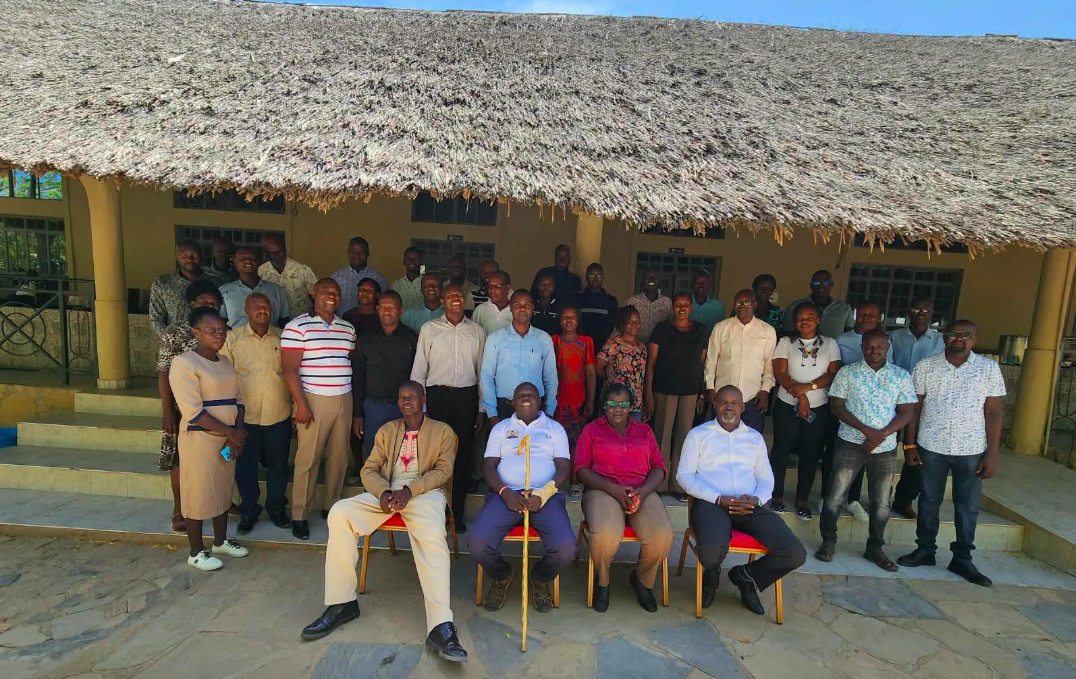
After a courtesy call, the visiting team travelled to the Namakat farm, where they witnessed women cultivating vegetables and participating in village savings and loaning activities.
The combination of irrigation farming, savings and access to financial support is intended to help households increase their incomes while strengthening their ability to meet basic needs.
The Namakat project is part of wider efforts to improve food security and livelihoods in Turkana by expanding access to water, supporting agricultural production and strengthening community-level financial inclusion.
Deputy CS in charge of Administration Joseph Nyang'a, Chief Officer for Partnerships and Resource Mobilization Janerose Tioko and Director of Protocol Peter Lomauge were also present during the visit.