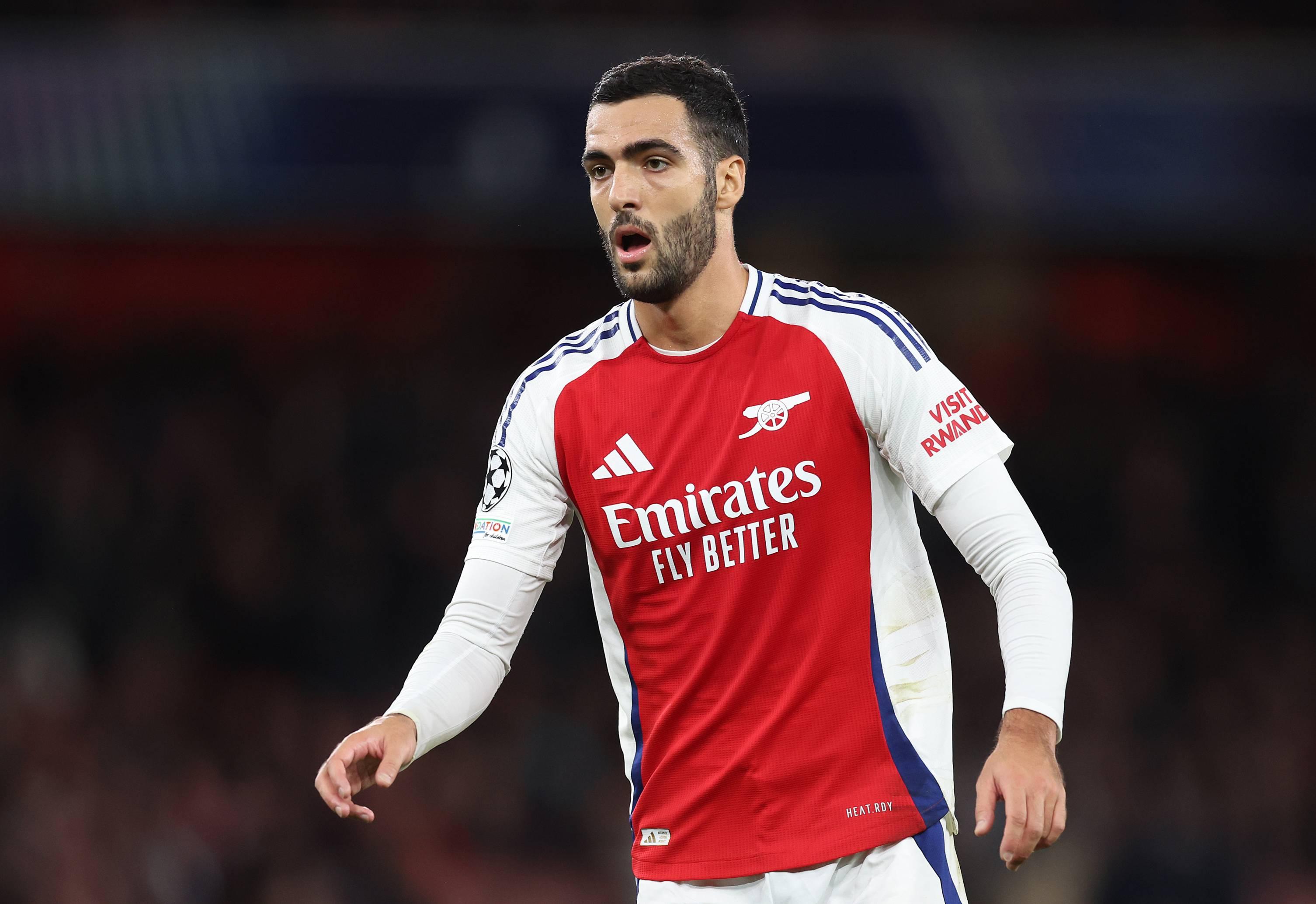
Arsenal midfielder Mikel Merino has revealed how a last-minute decision to change seats on Borussia Dortmund’s team bus may have saved his life when the vehicle was targeted in a bombing in 2017.
Merino was 20 years old when explosives detonated near Dortmund’s bus as the team travelled to its home leg of a Champions League quarter-final against Monaco.
Three devices containing metal pins had been concealed in a hedge along the route. The explosions damaged the bus and left players shaken as they prepared for the European fixture.
ALSO READ
A large piece of shrapnel reportedly became lodged in the headrest of the seat Merino would normally have occupied. However, he had chosen to sit elsewhere because his legs felt tight.
“The seats in the front reclined so I sat up there instead, and it may have saved my life,” Merino said in an interview with The Players’ Tribune.
“I think I have an angel on my shoulder. I'm actually fortunate to be alive at all.”
The Spaniard remembered the deafening explosion, the smell of smoke and the distress among those on board.
He said the bus nearly tipped over during the attack, leaving a lasting impression on the players and staff.
Merino also recalled seeing blood on the floor and hearing screams in the aftermath of the explosions.
Defender Marc Bartra suffered a broken wrist and underwent surgery. Merino later went to hospital to wait for news about his teammate.
The Champions League match against Monaco was postponed until the following day. Dortmund manager Thomas Tuchel criticised the decision to reschedule the fixture so quickly after the attack.
Sergei Wenergold, who admitted responsibility for the bombing, was sentenced to prison in 2018.
Merino said the incident remained an important part of his life and later influenced how he approached challenges in football.
Reflecting on the experience, he suggested that surviving the attack had given him a different perspective on setbacks and opportunities.
That outlook became particularly significant when he faced another major challenge: a stress fracture in his right foot that threatened his hopes of representing Spain at the World Cup.
According to the midfielder, doctors initially expected his foot injury to keep him out for around six months.
“The doctor said, ‘six months’,” Merino recalled.
He said the initial shock was followed by the realisation that the expected recovery period could jeopardise his World Cup ambitions.
“When I told my wife, Lola, that's when I broke down. My brain already understood, but my heart needed me to say it out loud,” he said.
Merino explained that his memories of surviving the Dortmund bombing helped him maintain his determination during rehabilitation.
He was unwilling to give up on another opportunity to represent Spain after missing out on the final squad for the 2022 World Cup, despite having featured in qualifying matches.
“I have to play. I will be at the World Cup, no matter what,” he said.
The midfielder added that he was prepared to undergo a procedure involving screws to support the injured foot if it offered a route back to fitness.
Merino described the effort involved in convincing Arsenal’s coaching staff and medical team that he could return to action in time to strengthen his World Cup case.
He said he pushed to feature in Arsenal’s final league match against Crystal Palace, despite the risks associated with returning from injury.
“I spent all week arguing with the Arsenal boss [Mikel Arteta] and the physios,” he said, explaining that the original plan had been for him to return later.
Merino eventually received an opportunity to play for around 30 minutes against Palace.
“That day, I was playing for the World Cup, 100%. And after that, I thought I had a good chance,” he recalled.
The following day, he watched the squad announcement on Spanish television, waiting anxiously to hear whether his name would be included.
When his selection was announced, he celebrated with his wife, Lola, and son, Marco.
His journey from the traumatic Dortmund attack to a determined comeback from injury highlights the personal challenges that can accompany a professional football career.