Kenya’s Judiciary is seeking Sh50.7 billion for the 2027/28 financial year, warning that the 2027 General Election could increase pressure on the institution as it handles election-related disputes, case backlogs and growing demand for justice.
The Judiciary is seeking Sh46.2 billion for recurrent expenditure and Sh4.5 billion for development expenditure.
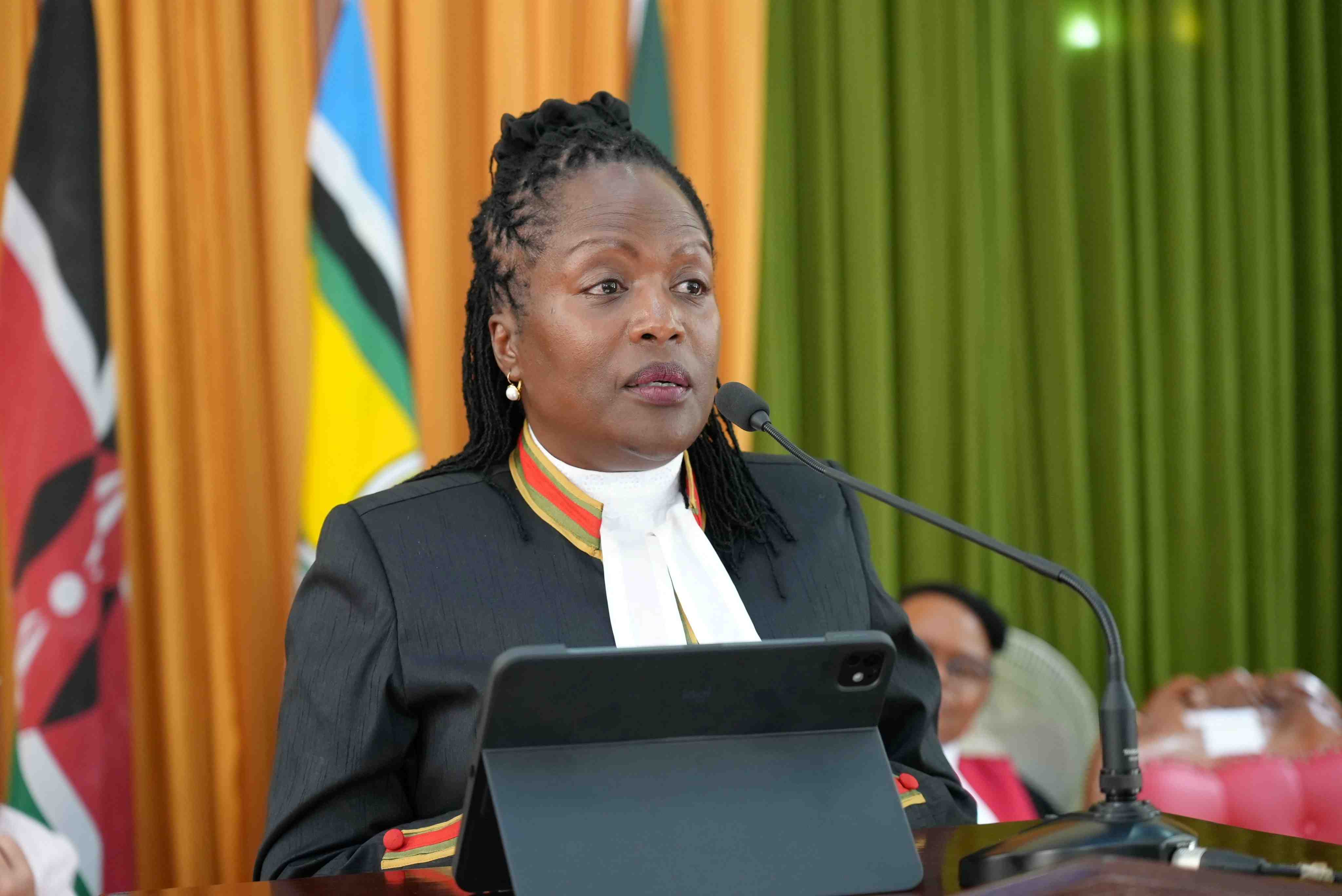
Speaking during a public hearing on the proposed budget for the Judicial Service Commission (JSC) and the Judiciary in Kajiado, Chief Registrar of the Judiciary Winfridah Mokaya said the election year would require adequate resources to enable the Judiciary to deal with disputes arising from the polls and carry out its constitutional responsibilities.
“The 2027/28 financial year will also coincide with the 2027 General Election, increasing the Judiciary’s need for resources to handle election-related disputes. The Judiciary would require adequate support to discharge its constitutional role in resolving disputes and protecting the rule of law during the electoral period,” Mokaya said.
Judiciary faces Sh20.4 billion funding gap
The Judiciary’s indicative budget ceiling has been set at Sh30.4 billion, leaving the institution with a funding gap of about Sh20.4 billion.
The gap represents 40.2 per cent of the Judiciary’s proposed budget.
The JSC has separately proposed Sh1.833 billion for the financial year against an indicative allocation of Sh1.038 billion.
This leaves the commission with a financing gap of Sh795 million, equivalent to 43 per cent.
Mokaya said adequate funding was needed to enable the Judiciary to respond to the growing demand for timely and accessible justice.
She said the public hearings being held across the country were not only required by the Constitution but also provided an opportunity for the Judiciary to hear from court users and align its plans with the justice needs of Kenyans.
“We recognise that the justice we dispense cannot serve its purpose if it is not responsive to the needs of its intended consumers,” Mokaya said.
She said the discussion was about more than budget figures, noting that behind every allocation was a citizen seeking justice, a family seeking resolution of a dispute, a survivor seeking protection, a child requiring a responsive justice system or a Kenyan relying on the rule of law.
Judiciary expands courts to improve access to justice
Previous public hearings identified case backlogs, delays in resolving cases, long distances to courts and the need for additional courts among the main challenges affecting court users.
In response, the Judiciary has increased its presence in different parts of the country.
During the last financial year, law courts were operationalised in Yala, Khwisero, Nyakach and Chepkemel, while nine more courts are planned for operationalisation during the current financial year.
The Judiciary has also established two new Court of Appeal stations in Kakamega and Meru.
The number of Magistrates’ Courts has increased from 143 to 148, while Small Claims Courts have grown from 40 to 55.
Judiciary recruits judges and magistrates
Mokaya said the JSC had recruited 1,182 judicial staff, 124 additional magistrates and 53 judges over the past year.
The judges included one Supreme Court judge, 15 Court of Appeal judges, 24 High Court judges, and 13 Environment and Land Court judges.
The recruitment is part of efforts to strengthen the Judiciary’s capacity as demand for judicial services continues to grow.
Judiciary resolves more than 576,000 cases
During the 2025/26 financial year, the Judiciary resolved 576,162 cases against 561,580 new cases filed, resulting in a case clearance rate of 103 per cent, according to Mokaya.
She said the Judiciary had also given priority to succession cases, which affect families across the country.
The full succession process, from filing to gazettement, has been automated through the Case Tracking System and the Urithi Portal, which is integrated with Government Printers.
The Judiciary is also running Rapid Results Initiatives targeting uncontested succession cases in courts across the country to speed up their resolution.
Mokaya said the Mahakama Popote initiative, which virtually deploys judicial capacity to court stations with high caseloads, helped resolve 22,516 matters during the last financial year.
The initiative is part of the Judiciary’s efforts to use available judicial capacity more efficiently and address differences in caseloads between court stations.
Judiciary seeks funding for technology and new courts
Judiciary Director of Finance Beatrice Kamau said demand for judicial services continued to exceed available resources despite the billions of shillings the institution channels into the economy.
She said additional funding would support the expansion of technology, operationalisation of new courts, stronger cybersecurity, the growing workforce and emerging justice needs.
The proposed Sh50.7 billion Judiciary budget therefore comes at a critical time, with the institution preparing for the additional demands that could arise during the 2027 General Election while continuing efforts to improve access to justice and reduce case backlogs.