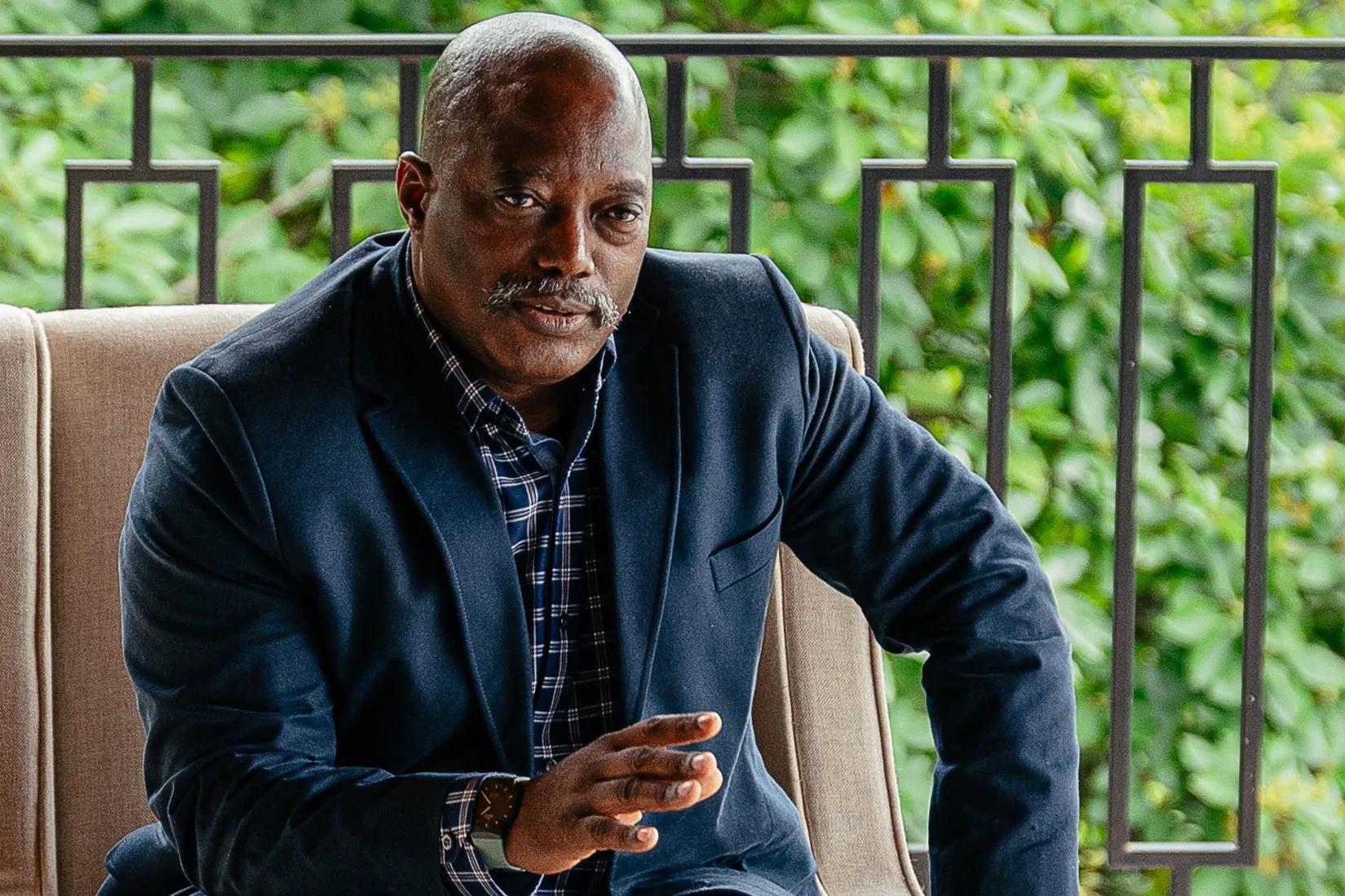
Former Democratic Republic of Congo (DR Congo) President Joseph Kabila has launched a new political and military coalition bringing together groups opposed to President Félix Tshisekedi’s government, including the M23 rebel movement.
The coalition, known as the Front for the Refoundation of the Nation (FRN), was announced on Monday in the eastern city of Goma. Its formation comes amid ongoing conflict in eastern DR Congo and efforts by regional and international mediators to secure peace.
The development could complicate negotiations by bringing political opposition figures and armed groups into a common framework.
New Coalition Brings Together Political and Armed Opposition
The FRN includes rebel groups previously associated with the Congo River Alliance, whose former leader, Corneille Nangaa, is among the coalition’s four vice presidents.
Speaking at a news conference at Kabila’s residence in Goma, coalition adviser Claude Ibalanky said the alliance aimed to restore the foundations of a functioning republic.
Ibalanky said the signatories had agreed to combine their forces, resources and capabilities to coordinate their activities.
He said the coalition intended to unite resistance groups against what it described as tyranny, including through the use of force.
The announcement had not received an immediate public response from Tshisekedi’s government, according to the report.
M23’s Inclusion Raises Security Concerns
The participation of M23 gives the coalition a significant military dimension.
The rebel group has captured substantial territory in eastern DR Congo, including Goma, the capital of North Kivu province, during an offensive that intensified the country’s security and humanitarian challenges.
Eastern DR Congo has experienced decades of conflict involving numerous armed groups competing for influence and control in a region rich in mineral resources and bordering Rwanda.
The Congolese government, the United States and United Nations experts have accused Rwanda of supporting M23. Rwanda has denied involvement.
The inclusion of the rebel movement in the FRN could complicate efforts to negotiate a settlement between the Congolese government and armed groups operating in the east.
Kabila’s Political Return
Kabila led DR Congo from 2001 to 2019 after succeeding his father, Laurent Kabila, who was assassinated.
His presidency was marked by controversy over delayed elections. After his constitutional term ended in 2016, elections were postponed for two years before the December 2018 vote.
Kabila’s preferred successor lost that election to Tshisekedi, who took office in January 2019.
Kabila’s latest move brings him back into active political affairs as the country continues to grapple with insecurity and disagreements over governance.
However, the extent to which the new coalition can unite DR Congo’s fragmented opposition remains uncertain.
Former President Faces Legal and Sanctions Issues
Kabila’s return to the political arena comes against the background of serious legal and international disputes.
A Congolese military court sentenced him to death in absentia last year after finding him guilty of treason, war crimes and crimes against humanity. The court accused him of collaborating with Rwanda and M23.
Kabila denied the allegations and described the proceedings as politically motivated.
The United States also imposed sanctions on Kabila earlier this year over his alleged role in financing and providing political support to rebel groups operating in eastern DR Congo.
These allegations and sanctions form part of the wider political context surrounding the launch of the FRN.
Peace Efforts Face a New Challenge
The coalition’s formation comes as diplomatic initiatives seek to end the conflict in eastern DR Congo.
Mediation efforts have involved the African Union, regional organisations and international partners, including initiatives associated with the Washington process and the Doha dialogue.
The African Union’s panel of facilitators has also engaged parties in Goma, Kigali and Kinshasa in efforts to narrow differences and advance negotiations.
The emergence of the FRN could complicate those initiatives by creating a shared platform for political opponents of Tshisekedi’s government and armed groups fighting its forces.
It also raises questions about how the coalition intends to participate in future negotiations and whether its members can agree on a common political programme.
For now, the coalition’s launch marks a new development in DR Congo’s political and security landscape as diplomatic efforts continue amid persistent fighting in the east.