Burundi’s Foreign Minister Edouard Bizimana has warned Kenyan authorities over the treatment of Burundian nationals following a government directive targeting undocumented foreign workers and foreign-owned small businesses.
Bizimana called on the Kenyan government to provide immediate protection to Burundian nationals living and doing business in the country, warning that failure to act could strain relations between Nairobi and Gitega.
The Burundian minister argued that Kenyans living in Burundi continue to live peacefully and cautioned that any failure to protect Burundian citizens in Kenya could have implications for Kenyans residing in Burundi.
The diplomatic tension follows President William Ruto’s directive for a crackdown on undocumented foreign workers and his position that certain small-scale businesses should be reserved for Kenyan citizens.
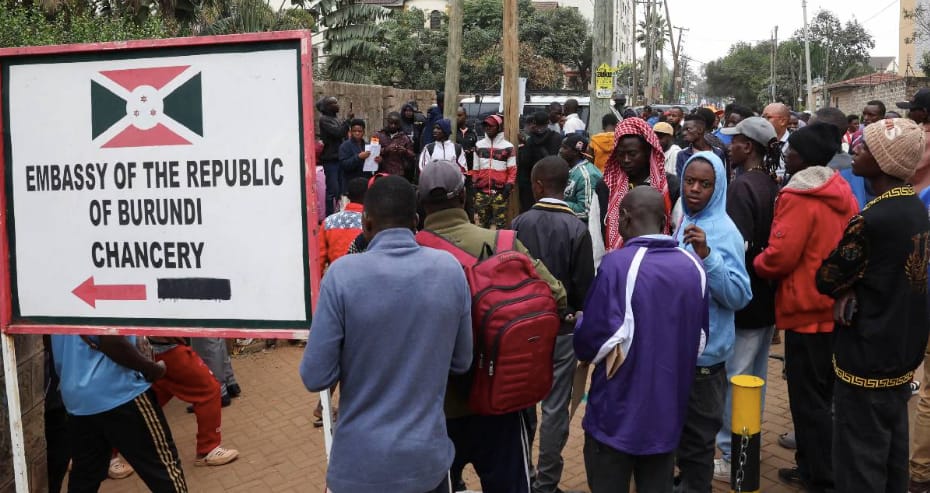
In response to the situation, Gitega Ndikuriyo, the Secretary General of Burundi’s ruling party, visited the Burundian Embassy in Nairobi to oversee emergency operations.
The embassy reportedly increased its volunteer staff to help process emergency travel documents for Burundian nationals seeking to return home amid concerns over the situation.
Although the Kenyan government later announced a 90-day grace period to allow regional nationals to obtain the necessary permits and documentation, some Burundian small-business owners had already flocked to their embassy to seek emergency travel documents.
Kenya’s Foreign Affairs Principal Secretary Korir Sing’oei subsequently visited Burundian nationals at their embassy in Nairobi and apologized for what he described as a misunderstanding surrounding the government directive.
Sing’oei said the government’s intention was to establish the identities, locations and activities of foreign nationals in the country to enhance their security.
He also assured Burundian nationals that those legally living and working in Kenya would be protected.
Kenya and Burundi have since opened talks aimed at resolving the tension surrounding the status of Burundian nationals and their business activities in Kenya.
The dispute places additional pressure on relations between the two countries, which are members of the East African Community and maintain close economic and regional ties.
As diplomatic talks continue, the handling of foreign traders and their businesses could determine whether the dispute remains an administrative matter involving permits and business licences or develops into a wider regional concern.
The outcome of the discussions is therefore likely to be closely watched by foreign traders, regional governments and citizens living and working across the East African Community.