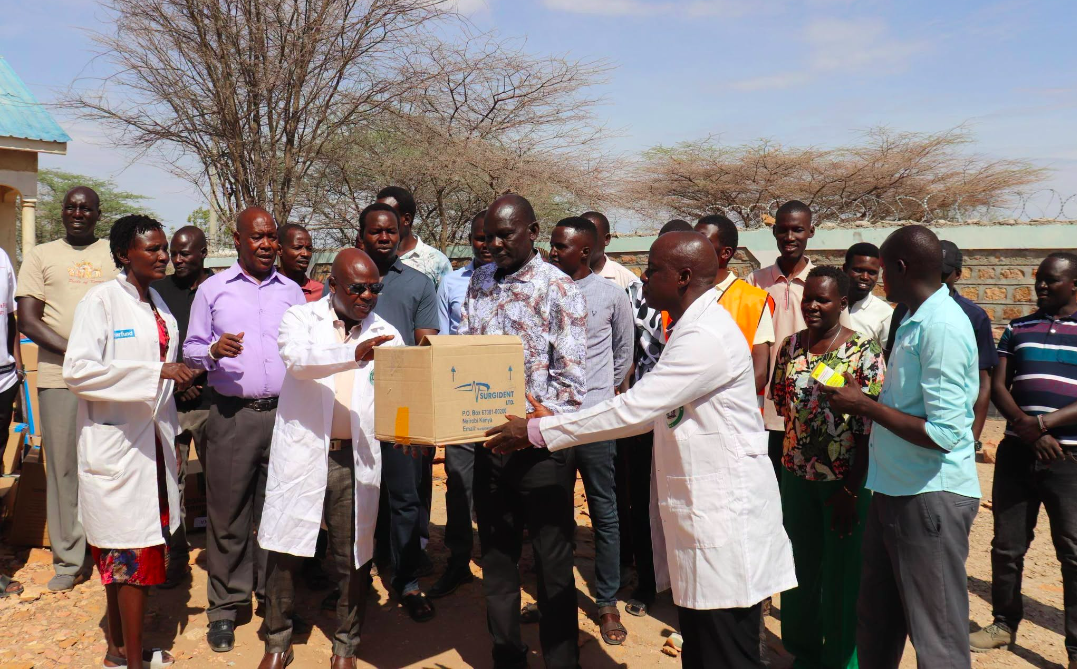
850,000 Livestock Targeted in Turkana Disease Control Campaign
Turkana County has launched a livestock disease control campaign targeting up to 850,000 animals across five sub-counties, as veterinary teams step up efforts to prevent the spread of diseases affecting pastoral communities.
The county has distributed veterinary drugs worth KSh15 million for mass vaccination and treatment of livestock, with a focus on controlling diseases including Peste des Petits Ruminants (PPR), Lumpy Skin Disease and Contagious Caprine Pleuropneumonia (CCPP).
Turkana Deputy Governor Dr John Erus said the intervention was particularly important in areas bordering Uganda and South Sudan, where the movement of livestock across borders can increase the risk of disease transmission.
He said the county was working to reduce livestock losses and protect pastoral households whose livelihoods depend heavily on cattle, sheep, goats and other animals.
Chief Officer for Livestock and Veterinary Services Peter Ikaru thanked the Directorate of Veterinary Services and the Food and Agriculture Organization (FAO), through VSF-Germany, for supporting the disease control efforts.
Ikaru said veterinary surveillance had identified an increase in livestock disease cases, prompting the county to intensify vaccination, treatment and community-level disease reporting.
Turkana Director of Veterinary Services Dr Benson Longo’r said increased livestock movement into areas such as Loima, Lokiriama, Turkana West, Turkana North and Kibish had heightened the risk of disease outbreaks.
The county is specifically targeting 25,000 cattle for vaccination against Lumpy Skin Disease and 100,000 sheep and goats against CCPP. The wider campaign will also address other livestock diseases, including PPR.
Veterinary officials are also strengthening disease surveillance through refresher training for Community Disease Reporters, who play a role in identifying and reporting suspected outbreaks in pastoral areas.
The campaign comes as Turkana continues to face challenges associated with livestock mobility, including movement across national borders. Such movement can make it more difficult to contain infectious diseases when animals from different areas mix.
Tsetse flies also remain a concern in areas where they occur because they can transmit trypanosomiasis, a disease that affects livestock. PPR, Lumpy Skin Disease and CCPP, however, are separate livestock diseases with different transmission patterns and control measures.
The county says the vaccination and treatment campaign is intended to reduce livestock deaths, protect pastoral livelihoods and strengthen early detection of livestock diseases across affected areas.