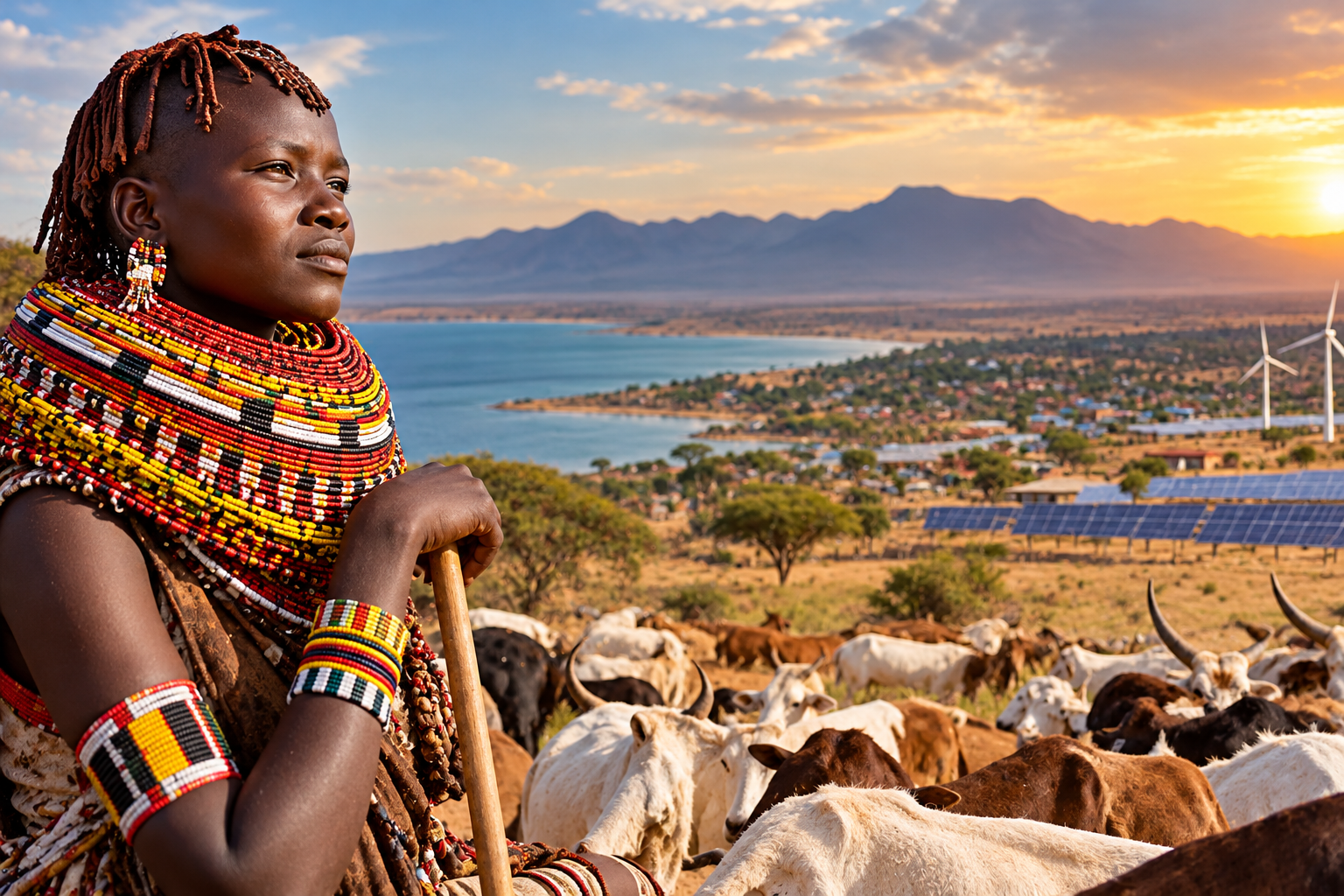
Turkana is more than a place on the map. It is a people, a culture, a history, and a way of life that has endured through generations. From the strength of its pastoral traditions to its deep connection with land, livestock, family, community, and resilience, Turkana culture carries a heritage that deserves to be valued, protected, and developed.
Yet valuing our culture should not mean looking only to the past. It should also mean asking an important question: How can we use what we have today to build a better future for the generations that will come after us?
One answer lies in investing in our own community land.
Our Land Is More Than Property
For the Turkana community, land is deeply connected to identity, livelihood, family history, and belonging. It is where communities raise livestock, establish homes, conduct business, preserve traditions, and plan for the future.
As Turkana continues to change and develop, community land can also become an important foundation for economic opportunities. Land can support agriculture where appropriate, livestock development, tourism, housing, renewable energy, commercial enterprises, markets, and other investments that are compatible with local priorities and environmental realities.
When communities invest wisely in their land, they create opportunities for young people to find livelihoods closer to home. They can create businesses, improve household incomes, support local services, and build assets that remain useful to future generations.
Civil Servants Can Play an Important Role
Among the people who can contribute to this transformation are Turkana professionals and civil servants working in different parts of the country.
Many civil servants leave Turkana to work in Nairobi, other counties, or different parts of the country. They earn salaries, acquire professional skills, and gain exposure to different economic opportunities.
But there is an opportunity to ask: How much of our knowledge, income, and experience can we bring back home?
Investing in community land does not necessarily mean abandoning one's career or moving back immediately. It can begin with small, responsible steps.
A civil servant might participate in a legitimate community investment group, support a cooperative, invest in a properly documented local enterprise, help develop family land, support a livestock value-chain business, or contribute professional knowledge to a community development project.
The principle is simple: earn where you work, but consider building where you come from.
If even a portion of the income earned by Turkana professionals is deliberately directed toward productive investments at home, the collective impact could be significant.
From Remittances to Investment
Sending money home to support family members is an important tradition for many households. It helps families pay school fees, meet medical expenses, build homes, and respond to emergencies.
But we can also think beyond consumption.There is a difference between money that is spent once and money that is invested in an asset or enterprise capable of producing value repeatedly.
Imagine a community where professionals contribute toward businesses that employ local young people. Imagine land being developed into productive enterprises. Imagine local investors partnering with people who have technical skills in agriculture, livestock, construction, tourism, renewable energy, finance, and technology.
Such investments can create an economic cycle in which money remains within the community for longer and creates opportunities for others.
Culture and Development Can Work
There is sometimes a fear that modernisation will weaken traditional culture. That concern deserves to be taken seriously.
But culture does not have to disappear because a community develops economically.
Turkana traditions, language, storytelling, music, traditional knowledge, livestock practices, craftsmanship, dress, food, and relationship with the environment can all become part of a modern economy when handled respectfully.
Cultural tourism, locally produced crafts, livestock enterprises, heritage initiatives, and other community-led ventures can potentially create income while keeping cultural knowledge visible and valued.
The goal should not be to commercialise everything.
The goal should be to ensure that economic development respects the people, values, and traditions of the community.
Invest Carefully, Not Emotionally
The call to invest in our community should not mean buying land without proper documentation or putting money into projects simply because they are located in Turkana. Investment requires due diligence.
Before committing money, investors should understand land ownership and applicable community land arrangements, confirm documentation, understand the relevant legal requirements, assess the business model, and seek appropriate professional advice.
Community investment should also be transparent. Where several people contribute money, there should be clear agreements about ownership, responsibilities, decision-making, profits, and accountability.
Good intentions alone do not guarantee good investments.
We need both community commitment and sound investment practices.
Let Us Change the Question
Instead of asking only, "What can Turkana give me?" we can also ask, "What can I build in Turkana?"
Instead of seeing community land only as a place to keep livestock or establish a homestead, we can explore its potential for responsible economic activity.
Instead of viewing employment outside Turkana as the end of our economic journey, we can see it as an opportunity to acquire income, skills, networks, and experience that can eventually contribute to development back home.
And instead of waiting for outsiders to discover every opportunity in Turkana, local people can become part of identifying, developing, and owning those opportunities.
A Call to Turkana Professionals
To the teachers, nurses, doctors, engineers, administrators, accountants, security officers, technicians, entrepreneurs, and other professionals from Turkana: your contribution to your community does not have to be limited to your salary or your job.
Your knowledge matters.
Your networks matter.
Your savings matter.
Your ideas matter.
And, when carefully and responsibly invested, your resources can help create opportunities for people who have not yet had the chance to leave home in search of employment.
A civil servant earning a regular salary may not be able to transform an entire community alone. But hundreds or thousands of professionals making thoughtful investments over many years can contribute to a different economic future.
The Future Should Have Our Footprints
The future of Turkana should not be built only by governments, NGOs, or external investors. Those partners can play important roles, but local people should also have a meaningful stake in the development taking place on their land.
Our communities should not only witness development; where possible, they should participate in owning and shaping it.
Valuing Turkana culture therefore means more than celebrating our traditions during cultural events. It means protecting our identity while creating opportunities for the next generation.
It means respecting our land while finding sustainable ways to make it productive.
It means encouraging professionals to remember where they come from and consider how their careers can contribute to the communities that shaped them.
Most importantly, it means believing that Turkana people can be both custodians of a proud heritage and builders of a prosperous future.
Let us value our culture. Let us respect our land. Let us invest responsibly in our communities. And let us leave behind not only stories of where we came from, but assets and opportunities for those who come after us.