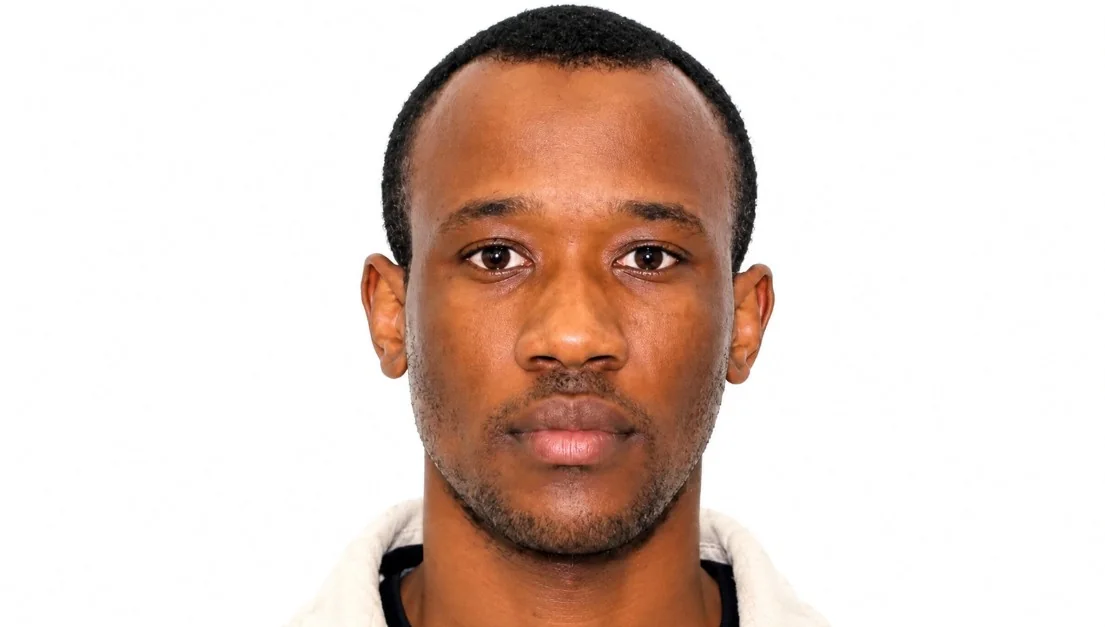
Authorities in North Carolina are seeking the relatives of a 28-year-old Kenyan man who died in the United States after repeated efforts to locate his next of kin proved unsuccessful.
The Spring Lake Police Department is appealing to the public for information that could help trace the family of Henry Mukolwe Macharia, who died in Spring Lake, North Carolina, on September 11, 2026.
According to police, Macharia was born on August 19, 1998, and died of natural causes. Authorities said they have so far been unable to identify or contact his relatives through the records and information available to them.
“On September 11, 2026, Henry Mukolwe Macharia, DOB 8/19/1998, died of natural causes in Spring Lake, NC. Attempts to locate the family of Macharia have been unsuccessful,” the police department said in a public appeal.
Police are now asking anyone who knew Macharia or has information about his relatives to contact authorities.
The appeal has also been circulated through Kenyan diaspora organisations, community networks and social media platforms in North Carolina and other parts of the United States as efforts continue to reach his loved ones.
Authorities have not released further details about Macharia's life in the United States, saying their immediate priority is to establish contact with his family.
When a foreign national dies in the United States and relatives cannot be located, authorities may work with the person's embassy or consular representatives as part of efforts to trace next of kin. In Macharia's case, efforts may therefore involve Kenyan diplomatic authorities in the United States.
If no relatives are located within the applicable period, the deceased may eventually be classified as an unclaimed decedent under local procedures. Depending on the jurisdiction, public authorities may then arrange for burial or cremation, while assets left behind can be handled under state unclaimed-property laws.
Macharia's case highlights the challenges authorities can face when people die without relatives or other next of kin being readily identifiable.
Researchers Pamela Prickett and Stefan Timmermans estimated in a 2025 analysis that between 114,000 and 148,000 people in the United States become unclaimed each year after their deaths. Their research found that the number increased during and after the Covid-19 pandemic.
Some counties have reported significant increases in the number of unclaimed bodies requiring government-funded arrangements. Maricopa County in Arizona, for example, recorded a 30 per cent increase, while Fulton County in Georgia handled the burials of 456 unclaimed bodies in 2021.
The National Missing and Unidentified Persons System (NamUs), a programme supported by the US Department of Justice, defines unclaimed decedents as people whose identities are known but whose next of kin cannot be located.
NamUs provides a national resource for medical examiners, coroners and law enforcement agencies working to identify missing or unidentified people and locate relatives.
According to the US National Institute of Justice, NamUs has helped resolve more than 61,000 missing, unidentified and unclaimed cases since the programme was established.
For Macharia's family and friends in Kenya or the United States, the immediate priority remains establishing contact with authorities so that his relatives can be informed and appropriate arrangements made.