Turkana County Government has begun developing a Resource Mobilization Strategic Framework (RMSF) aimed at strengthening partnerships, attracting development resources and addressing funding gaps across the development, economic and humanitarian sectors.
The initiative has received support from Sustainable Development Through Improved Local Government (SDLG/VNGI), with its representative Isaiah Lomorkai Ekai commending the county government for taking the lead in establishing a structured resource mobilization mechanism.
Ekai said a coordinated framework would enhance the county’s capacity to identify development priorities, engage partners and ensure available resources are aligned with the needs of local communities.
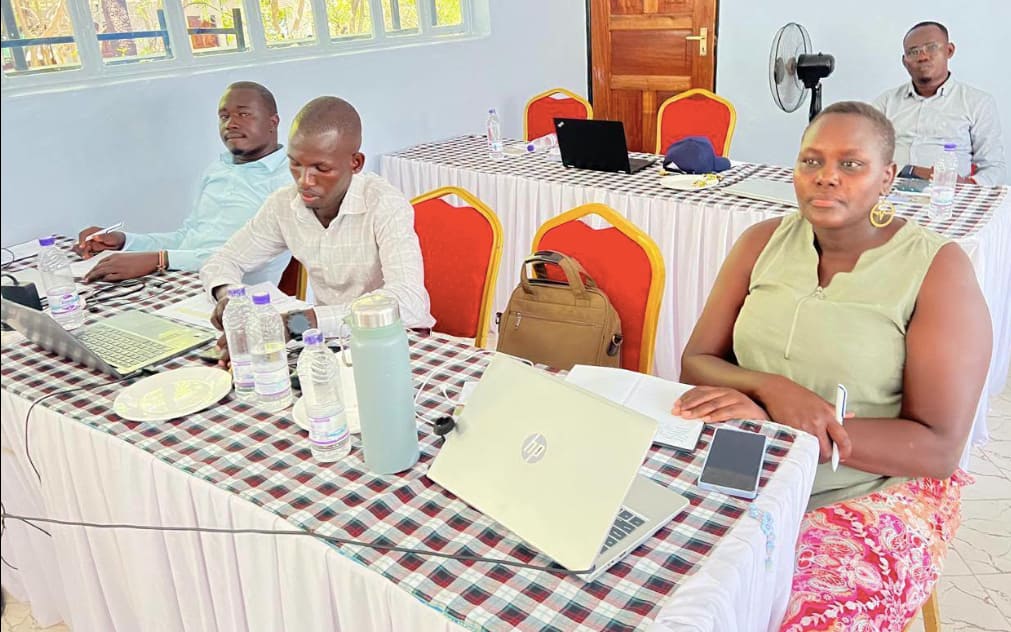
The first draft development meeting was held at Riamakori Hotel in Lokichar, bringing together county officials, development partners, academia and other stakeholders involved in shaping the proposed framework.
The process brings together organisations with shared development objectives, including SDLG/VNGI, the Adventist Development and Relief Agency (ADRA), Turkana University and the United Nations Resident Coordinator’s Office (UNRCO).
Deputy Director for Partnerships and Resource Mobilization Coordination Michael Aupe said the framework would establish thematic priorities for resource mobilization while providing a coordinated platform for engaging donors and development partners.
He identified partner and donor mapping, development of project pipelines and portfolios, results reporting and indicators, as well as capacity building for county staff as some of the key elements to be incorporated into the framework.
“Turkana County Government will be the third county after Nairobi and West Pokot counties to come up with the Resource Mobilization Framework,” Aupe said.
Once completed, the framework is expected to help the county match development partners with priority areas, reduce duplication of interventions and improve coordination among organisations operating in Turkana.
Deputy Director of Youth Affairs in the Department of Gender and Youth Affairs Ekidor Linus Namoe said the Ushirika Plan would contribute to the process by supporting the mapping of partners based on their areas of development interest.
“Each partner is mapped according to similar development interests to ensure proper coordination from the framework,” Namoe said.
Turkana University lecturers Dr Obura Collins and Dr Koross Benjamin, who are serving as consultants in the process, presented a situation analysis and roadmap for developing the RMSF.
They also examined seed budget allocation and emphasised the need for a consolidated framework with clearly defined partnership priorities.
Chief Statistics Officer Julius Ekal said the framework would be anchored on the Third County Integrated Development Plan (CIDP III) and informed by an accurate assessment of the county’s resource gaps.
Ekal also identified Own Source Revenue (OSR) as a critical component of Turkana’s internal resource mobilization efforts.
The proposed framework is intended to address resource gaps affecting development institutions, economic growth and humanitarian response while creating a stronger platform for attracting external funding and technical support.
Stakeholders also called for social development priorities to be incorporated into the framework.
Representing the Girl Child Network, Geoffrey Esibtar urged the county to give greater attention to girl-child education, particularly Early Childhood Development Education (ECDE), as well as interventions aimed at addressing early marriage.
The Lokichar meeting marks the beginning of the RMSF development process, which is expected to provide Turkana County with a clearer and more coordinated strategy for mobilizing, managing and directing resources towards its priority development needs.


