

Haiti’s spiraling crisis has been described as a “human tragedy” and a “disastrous humanitarian situation,” with armed gangs now controlling vast parts of the country.
According to the United Nations, nearly 1.4 million people have been displaced as of March 2026, with the capital, Port-au-Prince, hardest hit by relentless violence.
Gangs Control Majority of Capital
A recent UN report shows that at least 26 gangs now control up to 90% of Port-au-Prince and surrounding areas, underscoring the scale of lawlessness.
UN-designated human rights expert, William O’Neill, warned that the crisis has triggered unprecedented suffering, with children making up nearly half of all gang members.
Political Crisis Worsens Instability
Beyond the humanitarian emergency, Haiti is also grappling with political uncertainty following the end of the transitional council’s mandate in February 2026.
The council, led by Laurent Saint-Cyr, handed over power to Prime Minister Alix Didier Fils-Aime amid growing instability.
The country has remained volatile since the assassination of President Jovenel Moise in 2021, with planned elections still uncertain.
Kenya-Led Mission Ends, Chad Takes Over
Efforts to stabilise Haiti saw the United Nations Security Council approve the Multinational Security Support (MSS) mission in October 2023, with Kenya leading the deployment.
Nearly 980 Kenyan officers were sent under the command of Godfrey Otunge.
By October 2025, the mission transitioned into a larger Gang Suppression Force (GSF), expected to deploy up to 5,500 personnel.
Kenyan Troops Return Home
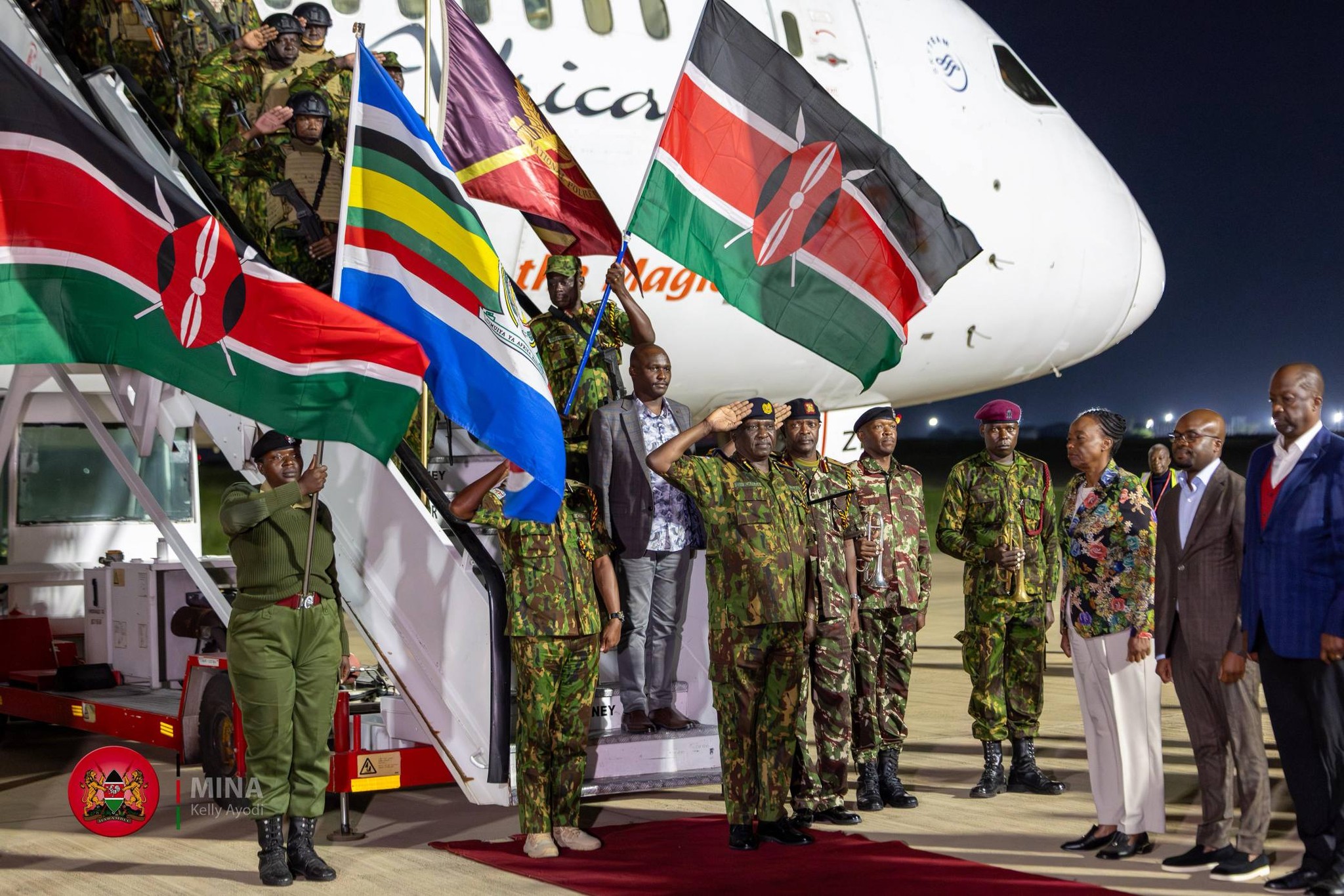
On March 17, 2026, a second contingent of Kenyan police officers arrived at Jomo Kenyatta International Airport in Nairobi where they were received by top officials including PS Raymond Omollo, IG Douglas Kanja and Ambassador Dr. Monica Juma.
PS Omollo praised the officers for their bravery saying; “In a foreign land, under difficult and often dangerous conditions…they upheld the highest standards of professionalism.”
Fallen Officers Honoured
Kenya lost three officers during the mission, Benedict Kabiru, Kenedy Mutuku and Samuel Kitwai.
While Mutuku and Kitwai have been laid to rest, Kabiru’s body is yet to be repatriated nearly a year after his death in an ambush in Haiti.
Why the Kenya-Led Mission Struggled
Despite initial gains, the MSS Mission faced significant challenges such as underfunding and lack of full UN backing, insufficient personnel and equipment, and poor logistical support.
Speaking at the United Nations General Assembly, President William Ruto revealed that Kenyan forces operated at only 40% capacity. He also cited unreliable equipment, including second-hand vehicles that frequently broke down in dangerous areas.
New Hopes for Stability
Despite setbacks, President Ruto noted some progress, including the reopening of key infrastructure such as the airport and hospitals.
The transition to the larger GSF mission is expected to strengthen operations, with broader international support.
Uncertain Future for Haiti
With gangs still dominant and political stability elusive, Haiti’s path to recovery remains fragile. There’s growing consensus that restoring political order will be key to enabling humanitarian aid, rebuilding infrastructure, and strengthening security forces.