
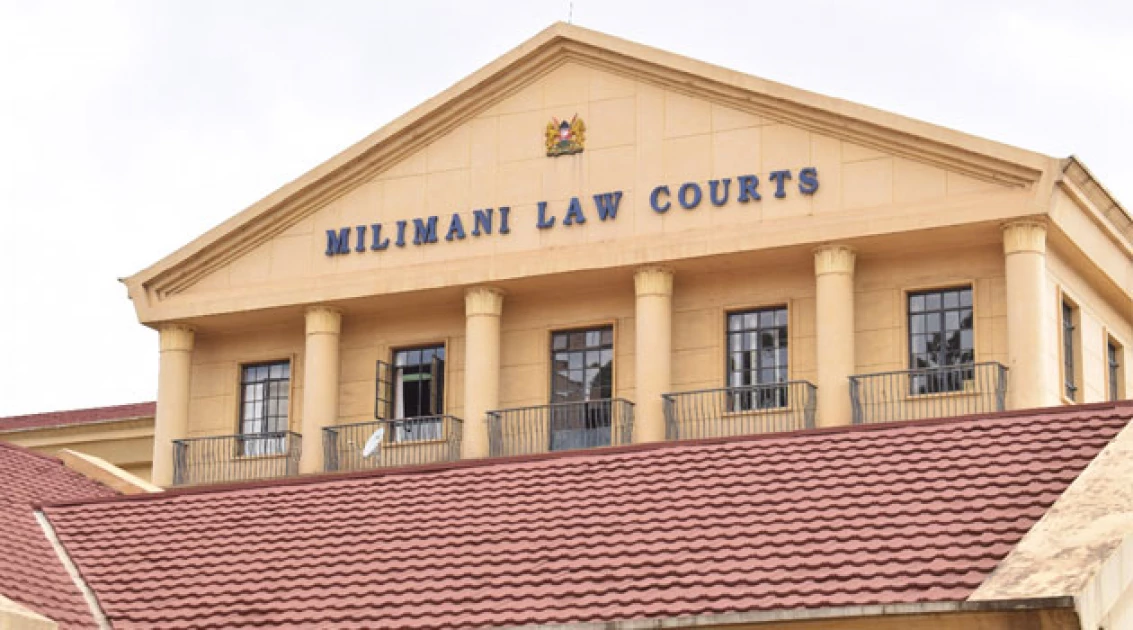

The Judicial Service Commission (JSC) has asked the court to dismiss a petition seeking to compel the Judiciary to immediately improve accessibility at Milimani Law Courts, arguing that disability-friendly infrastructure can only be implemented progressively due to financial and structural limitations.
In a replying affidavit, JSC Secretary Winfridah B. Mokaya said the commission recognises the constitutional rights of persons with disabilities but noted that upgrading older court buildings to meet universal accessibility standards requires significant investment and cannot be achieved instantly.
Mokaya explained that key improvements — including repairing lifts, constructing ramps and installing disability-compliant facilities — are major infrastructure projects that depend on budget allocations approved by Parliament of Kenya.
She further noted that Milimani Law Courts is a historic facility whose full upgrade requires careful planning and coordination with the National Treasury and other government agencies.
“The realisation of universal accessibility at stations like Milimani Law Courts is a capital project dependent on budgetary appropriations from the National Assembly,” Mokaya said in the affidavit.
According to the JSC, the Judiciary has requested Sh50 million in the 2026/2027 financial year to restore lifts and construct disability-compliant washrooms at the court complex.
Mokaya also pointed to ongoing efforts aimed at improving access to justice for marginalised groups. She said the Judiciary is implementing the Socail Transformation through Access to Justice (STAJ) blueprint, which prioritises universal accessibility in new court buildings and outlines plans to gradually renovate older facilities.
Despite budgetary constraints, the affidavit states that the Judiciary has already completed accessibility ramps at Murang’a Law Courts in May 2025 and Butali Law Courts in November 2025 as part of efforts to remove barriers to justice.
Mokaya added that the Judiciary has also adopted a Disability Mainstreaming Policy, which provides for reasonable accommodation for persons with disabilities and requires annual work plans to track progress across court stations.
The JSC maintained that it is actively addressing accessibility challenges within available resources and urged the court to take into account the constitutional principle of progressive realisation.
The commission further argued that the orders sought in the petition would interfere with the Judiciary’s budget planning and administrative functions.
The petition was filed by lobby group Sheria Mtaani, which is seeking court orders compelling the commission to ensure court buildings are accessible to marginalised groups, particularly persons with disabilities.