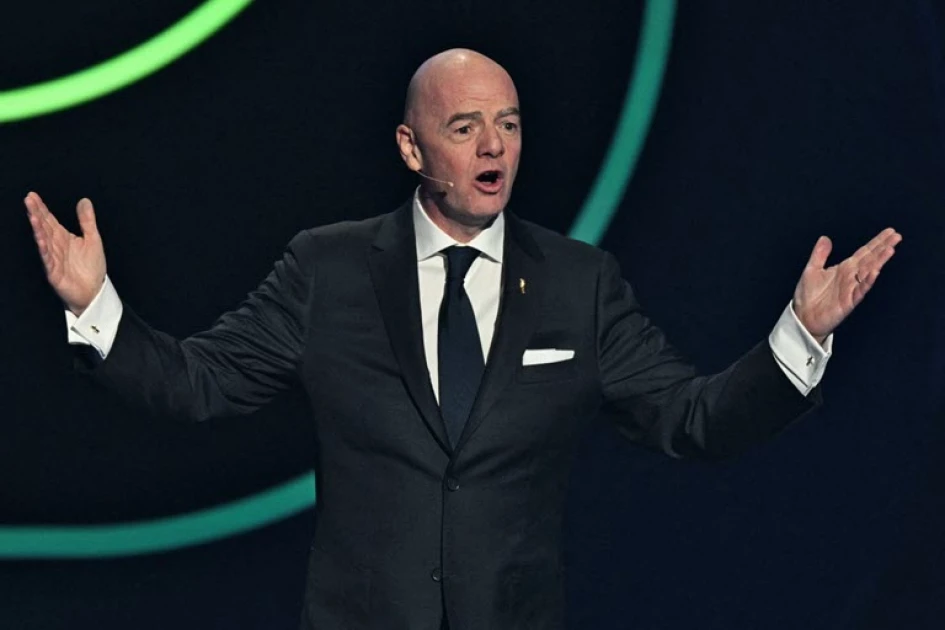

ZURICH- FIFA President Gianni Infantino has signaled a potential regulatory crackdown on players who cover their mouths while speaking to opponents, a move aimed at eliminating the blind spots often used to mask racial abuse.
The proposal follows a high-profile incident during last month’s Champions League match between Benfica and Real Madrid. Argentina’s Gianluca Prestianni stands accused of racially abusing Real Madrid and Brazil forward Vinicius Junior; it is alleged that Prestianni intentionally obscured his mouth with his jersey to prevent officials and cameras from documenting his words.
The issue took center stage during Saturday’s meeting of the International Football Association Board (IFAB), the body responsible for the sport’s laws.
“If a player covers his mouth and says something, and this has a racist consequence, then he has to be sent off, obviously,” Infantino told Sky News.
“There must be a presumption that he has said something he shouldn’t have said, otherwise he wouldn’t have had to cover his mouth.
“I simply do not understand — if you don’t have something to hide, you don’t hide your mouth when you say something. That’s it, as simple as that.
“And these are actions that we can take and we have to take in order to be serious about our fight against racism.”
The Football’s governing body is expected to deliberate on new enforcement measures aimed at preventing players from covering their mouths- a practice that may be banned as early as this year’s 2026 World Cup/
The 76th FIFA Congress is set to convene in Vancouver next month, serving as the final staging ground for a decision that could fundamentally alter the rules of engagement on the pitch.
In a further attempt to reshape football’s disciplinary landscape, FIFA President Gianni Infantino has also introduced the concept of tiered sentencing for racial abuse. The severity of a player’s punishment could be tethered to their willingness to issue a public apology.
“Maybe we should also think about not just punishing, but also somehow allowing, changing our culture, allowing players or whoever does something to apologise,” he added.
“You can do things that you don’t want to do in a moment of anger (and) apologise and then the sanction has to be different, to move one step further and maybe we should think about something like that as well.”
While Prestianni has issued a firm denial regarding the incident, he remains at the center of a high-stakes disciplinary hearing. Under UEFA’s strict anti-discrimination protocols, the midfielder faces a mandatory 10-match ban if the charges are proven.