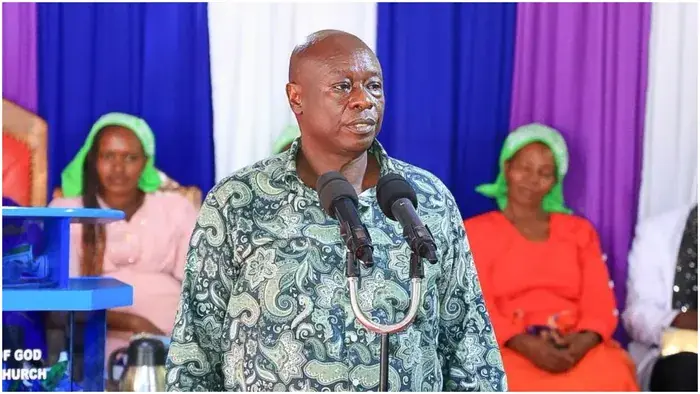
Democracy for the Citizens Party (DCP) leader Rigathi Gachagua has given the Independent Electoral and Boundaries Commission (IEBC) until January 2027 to address concerns raised by opposition leaders over preparations for the August 2027 General Election.
Gachagua warned that failure by the commission to engage political leaders and respond to their demands could prompt the opposition to mobilise Kenyans to visit IEBC offices across the country.
He made the remarks during a church service in Runyenjes, Embu County, on Sunday, November 22, where he questioned the commission’s preparedness, particularly regarding the voter register, election technology and the management of presidential results.
ALSO READ
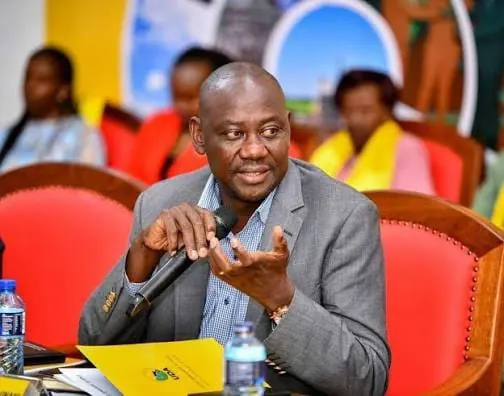

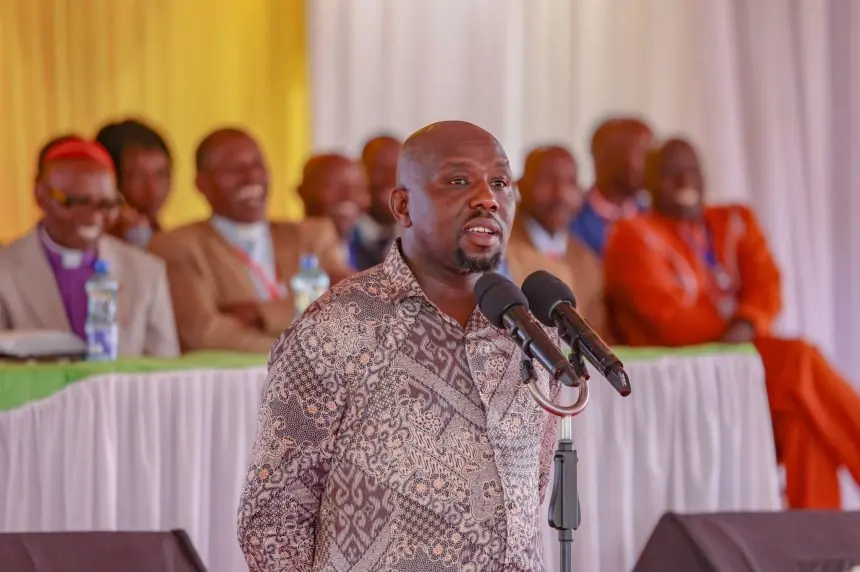
The former Deputy President called on IEBC to clarify when it would conduct an audit of the voter register to identify and remove names of deceased persons, duplicate entries and individuals who may have been irregularly registered.
“IEBC, we want to know when the audit of the voter register will be conducted so that we can remove the names of people who have since died,” Gachagua said.
He also raised concerns over the possible registration of foreign nationals, arguing that the register must be reviewed to ensure that only eligible voters participate in the election.
In his remarks, Gachagua referred to comments attributed to United Democratic Alliance (UDA) Secretary General Hassan Omar, alleging that the ruling party intended to rely on deceased persons to influence the election outcome. Omar has reportedly maintained that his remarks were taken out of context.
The DCP leader also questioned the status of the electoral technology supplied by Smartmatic, whose existing contract with IEBC was due to expire on November 24, 2026.
He argued that procuring, installing and testing a replacement system could take between five and six months, raising concerns about continuity of voter registration if a new arrangement was not secured in time.
Gachagua specifically questioned how the commission would conduct the planned mass voter registration exercise in early 2027 if the existing technology arrangement expired before a replacement system became operational.
The concerns come as IEBC faces procurement challenges involving election technology and other materials.
During a recent engagement with political stakeholders, IEBC Commissioner Anne Nderitu acknowledged that legal challenges had disrupted procurement processes, including the acquisition of election technology and ballot papers. However, she maintained that the commission had the time and expertise needed to prepare for the election.
Gachagua also opposed the proposed arrangement for a national presidential results tallying centre, insisting that results should be declared at constituency level before being independently tallied by political parties and other stakeholders.
“We want results to be done on constituency level and we will tally it ourselves,” he said.
His position reflects demands raised by opposition leaders during their recent engagement with IEBC, including calls for greater transparency in results transmission and the decentralisation of presidential results tallying.
Gachagua warned that the commission had until January 2027 to address the outstanding concerns.
“We are telling IEBC, if you do not want to listen to leaders, we will ask Kenyans to come to talk to you. Ethekon, you have a choice to make, you either talk to the leaders or talk to Kenyans,” he said.
The remarks followed a walkout by opposition leaders from a consultative meeting with IEBC in Nairobi on Thursday, November 19.
The leaders, among them Wiper Party leader Kalonzo Musyoka, Gachagua and Nairobi Senator Edwin Sifuna, accused the commission of failing to address concerns they had repeatedly raised over electoral reforms and preparations for the next General Election.
They said IEBC had not honoured earlier commitments to establish a technical team to discuss their proposals, including an independent audit of the voter register, changes to election technology and the decentralisation of presidential results tallying.
IEBC subsequently criticised the walkout, saying the leaders had left after making preliminary remarks and presenting their demands, before the commission could make its presentation or begin substantive discussions.
The commission urged political leaders to remain engaged and submit their proposals through formal channels, maintaining that walking away from dialogue would not resolve the outstanding concerns.
The disagreement highlights growing tensions between the electoral commission and sections of the opposition as preparations for the 2027 General Election continue.